logo

How to Remove Black Spots on Patios (Lichen) Safely & Effectively

Patio black spot (lichen) is one of the most common yet stubborn problems homeowners face on patios, driveways, and block paving. These tiny black marks root deep into stone, concrete, and paving, which is why even strong patio cleaners or jet washing often fail to remove them.

Most homeowners try to tackle it themselves, thinking it’s a straightforward task that will save money. But here’s the reality: DIY methods rarely achieve a spotless, lasting finish. By the time you’ve spent hours scrubbing, bought chemicals, and still found the black spots clinging on, the cost and frustration often end up higher than calling in a professional.

That’s where I come in. I’m Frank Bishop, founder and head cleaning specialist at Feel the Pressure UK. With over 15 years of hands-on experience, I’ve personally restored thousands of patios and exterior surfaces across London and the Home Counties. Every photo you’ll see here is from my own work — no stock images, no theory.

In this blog, I’ll guide you through:

  • The safe steps for DIY patio black spot removal.

  • The hidden risks of attempting it yourself.

  • And my professional patio black spot removal service — guaranteed to deliver a spotless, long-lasting finish.

If you’d rather skip the hassle and get proven results, take a look at my Patio Cleaning Service or my Patio Black Spot Removal Service to see how I can help.

feel_the_pressure_patio_cleaning.webp

What Is Black Spot Lichen and Why Is It So Hard to Remove from Patios?

If you’ve spotted small black dots spreading across your patio — or even on your driveway — that simply won’t come off with scrubbing or pressure washing, you’re dealing with patio black spot lichen.

Unlike dirt, moss, or mould, black spot lichen is a tough, slow-growing organism made up of algae and fungus working together. It doesn’t just sit on the surface. Instead, it sends root-like filaments deep into the pores of stone, block paving, and concrete. That’s why even when you jet wash the surface, the black spots cling on — often returning within weeks.

Black spot lichen is also incredibly resilient. It survives through harsh winters, resists most off-the-shelf patio cleaners, and clings on year after year unless treated with the right method.

It’s the reason so many people call me after they’ve tried DIY patio black spot removers without success. With years of hands-on patio and driveway cleaning experience, and access to specialist systems like DOFF, Therma-Tech, and Torik steam cleaners, I can remove black spot lichen safely and effectively — restoring patios and driveways to their best condition.

If you’re struggling with black spots on your driveway too, take a look at my Driveway Cleaning Service. And for a guaranteed fix, see my Patio Black Spot Removal Service.

feel_the_pressure_patio_cleaning39.webp

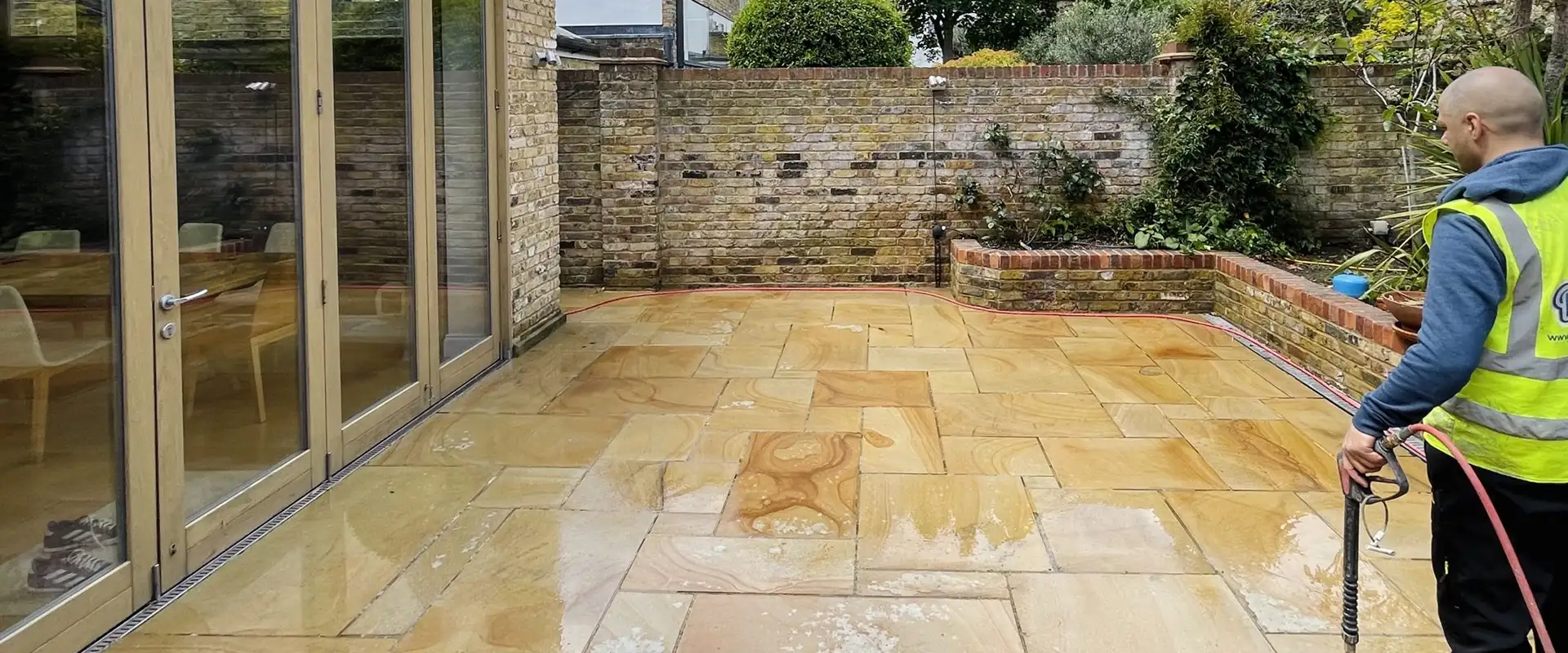
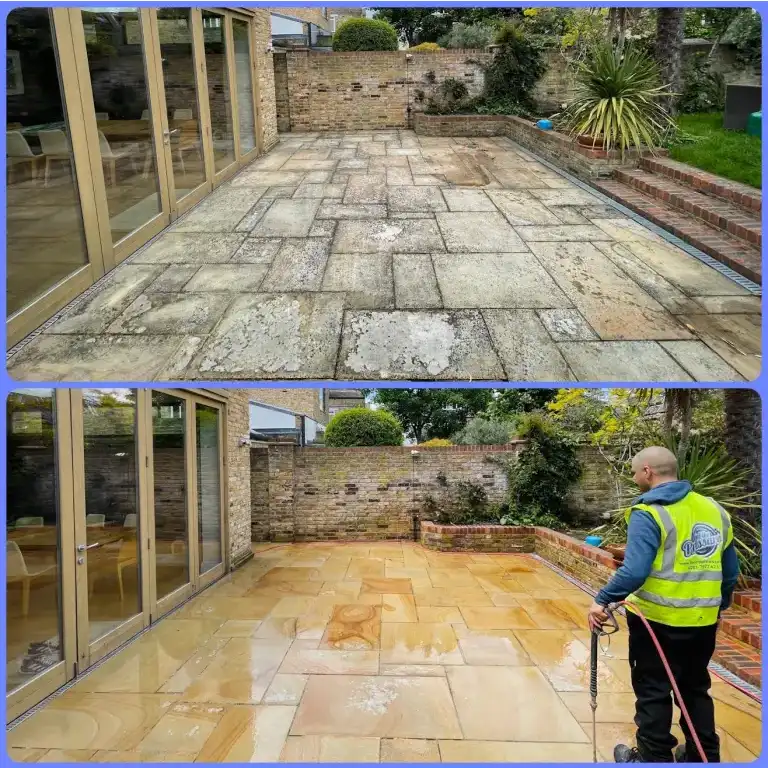
Indian sandstone patio in Highgate, London, badly infested with black spot lichen. The root-like growth penetrates deep into the pores of the stone, making it almost impossible to remove with standard patio cleaners or pressure washing. After treatment, the natural colour of the sandstone is fully restored

Why Standard Patio Cleaning Often Fails Against Black Spot

If you’ve tried blasting your patio with a jet washer or scrubbing away with a shop-bought patio cleaner, only to find the black spots still staring back at you — you’re not alone.

The problem is simple: standard pressure washing only cleans the surface. Black spot lichen doesn’t live there — it pushes microscopic roots deep into the pores of stone, block paving, and concrete. A jet washer may make your patio look cleaner for a few days, but those roots stay firmly in place. Within weeks, the black marks start to return. In some cases, using too much pressure even damages the surface, blowing out pointing or scarring the stone.

Off-the-shelf patio black spot removers can be just as disappointing. Most products are too weak to reach the lichen at its roots, so you end up spending money and time with little to show for it. Stronger chemicals can be risky too — they may bleach or stain the surface without ever fully removing the lichen.

The truth is, DIY methods often lead to frustration, wasted expense, and a patio that still looks patchy. Worse still, the longer black spot is left untreated, the deeper it settles in — making it even harder to remove.

This is why so many homeowners across London and the Home Counties turn to me after trying everything themselves. With years of hands-on experience and specialist equipment, I can guarantee results where DIY fails. If you’d prefer to skip the wasted effort and get your patio restored properly, take a look at my Patio Cleaning Service or go straight to my Patio Black Spot Removal Service for a guaranteed solution.

feel_the_pressure_patio_cleaning44.webp

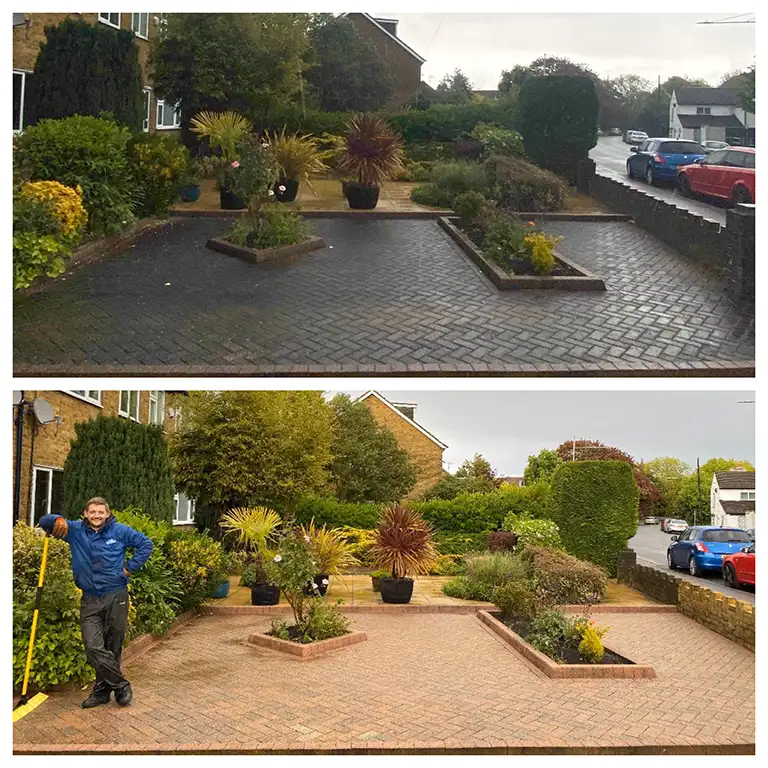
Block paving driveway in Surbiton, Surrey. Despite repeated jet washing, black spot lichen remained deeply rooted in the paving. Standard patio and driveway cleaning methods only brighten the surface temporarily, but the spores survive below — which is why professional treatment is needed for lasting results

DIY Tips for Removing Patio Black Spot Lichen (Safely)

It’s natural to want to try removing patio black spot lichen yourself before calling in a professional. On the surface it looks like a straightforward job, and many people think they’ll save money by tackling it themselves. Unfortunately, it’s rarely that simple. Still, if you do want to give it a go, here are the safest steps — based on what I use as a professional.

Step 1: Choose the Right Cleaner
Only use products specifically designed for patio black spot removal and for your surface type. Never use acid-based cleaners, as they can permanently damage natural stone. Keep in mind that lichens embed deep into stone, so weaker off-the-shelf products may struggle. Professionals (like me) mix specialist batches on the day to match stone type — but for DIY, make sure you buy enough product to cover the full square meterage of your patio.

Step 2: Pick the Right Weather
Timing is everything. Avoid applying chemicals in the rain, as they’ll be diluted and washed away before working. On the other hand, don’t apply in very hot or sunny conditions — direct sunlight causes products to dry too quickly, increasing the risk of damage and leaving behind stubborn white, bubble gum–like residues. The ideal conditions are a mild, overcast day with temperatures between 10–20°C, giving the solution time to soak in and work effectively.

Step 3: Wear Protective Clothing
Before handling any cleaners, make sure you’re protected. Most patio black spot removers contain sodium hypochlorite (bleach), which is highly corrosive. Always wear:

  • Thick rubber gloves

  • Safety goggles or a face shield

  • Waterproof boots

  • Old clothes or chemical-resistant overalls

Even small splashes can burn skin or eyes, and mist from sprayers can irritate your lungs. PPE is essential if you want to attempt this safely.

Step 4: Preparation
Clear the patio of furniture, pots, and decorations. Black spot removers are corrosive and can damage plastics, UPVC, painted surfaces, and plants. Pre-wet surrounding grass and borders with clean water to help protect them from staining.

Step 5: Apply Evenly and Safely
Apply the cleaner with a watering can or sprayer, keeping the coverage even. Avoid overspray on plastics, UPVC, or painted surfaces, as cleaners can leave red/orange etching marks. Follow the manufacturer’s instructions closely — leaving chemicals down too long can damage the stone or bleach artificial/dyed surfaces. One of the biggest mistakes is letting bleach-based products dry out; when this happens, sodium hypochlorite crystallises into a sticky residue that bonds deep into the stone and is almost impossible to remove without professional steam cleaning.

Step 6: Low-Pressure Cleaning
If you’re lucky enough to have access to low-pressure steam cleaning equipment, always use it. Superheated water kills spores and gives a much deeper clean than cold water alone. If cold water pressure washing is your only option, reduce the pressure to the absolute minimum (around 70 bar) to lower the risk of damaging pointing, grout, or delicate stone.

Step 7: Assess the Results
After cleaning, carefully inspect the patio. In some cases, a single application of a properly formulated patio black spot remover followed by low-pressure cleaning may be enough to see a big improvement. But where lichen is prominent and well developed, multiple applications and cleaning passes may be required to fully restore the stone. This is perfectly normal, as black spot lichen anchors itself at different depths depending on the stone type and severity of the infestation.

Step 8: Final Rinse & Neutralise
Once you’re satisfied with the results, give the patio a thorough rinse to flush away any leftover chemicals. Direct rinse water into drainage where possible, and try to avoid flower beds and lawns. If you want to go the extra step, you can neutralise bleach-based cleaners with diluted white vinegar before rinsing again with clean water.

Step 9: Be Realistic About Results
DIY methods can improve the appearance of your patio, but they rarely deliver a spotless, long-lasting finish. Without professional superheated steam cleaning, spores often remain alive deep in the stone, leading to regrowth and darker stains over time. That’s why many homeowners eventually turn to a professional patio black spot removal service — it guarantees the spores are killed at the root, the natural colour of the stone is restored, and the surface is fully protected for longer.

If you’d prefer to skip the hassle, risk, and uncertainty of DIY, take a look at my Patio Black Spot Removal Servicefor guaranteed results. For general upkeep against dirt, moss, and algae, my Patio Cleaning Service is the perfect option.


feel_the_pressure_patio_cleaning7.webp

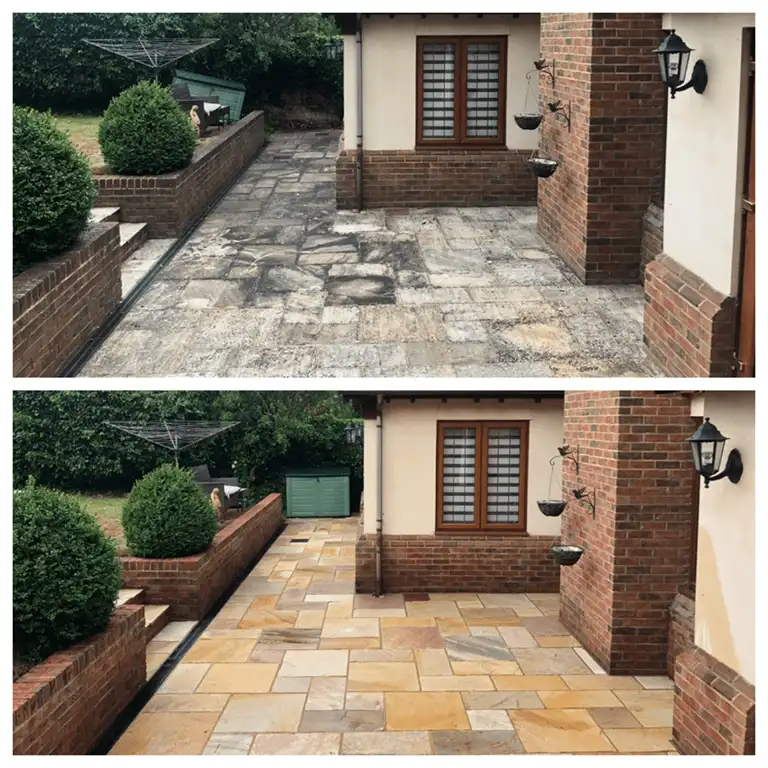
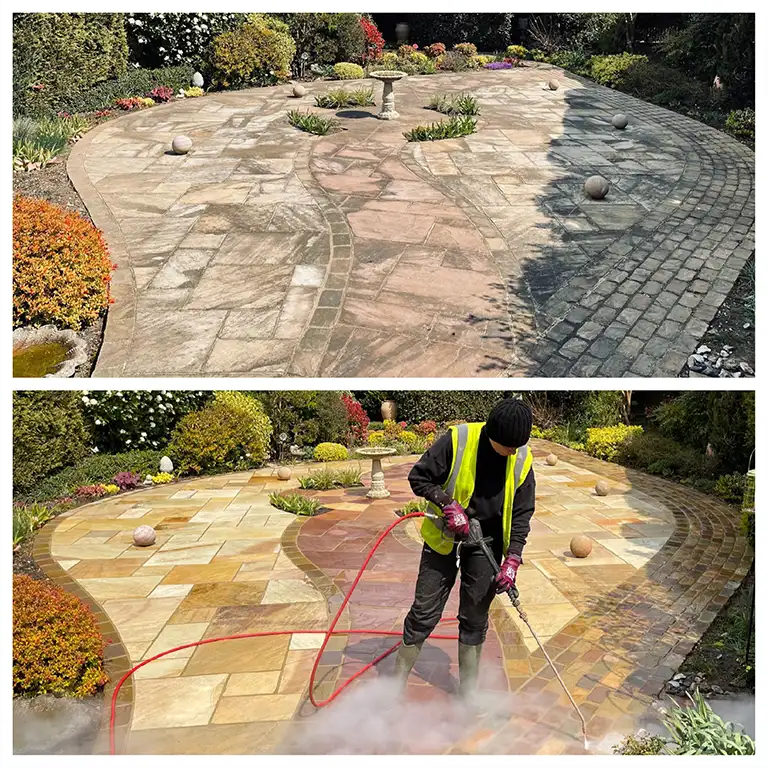
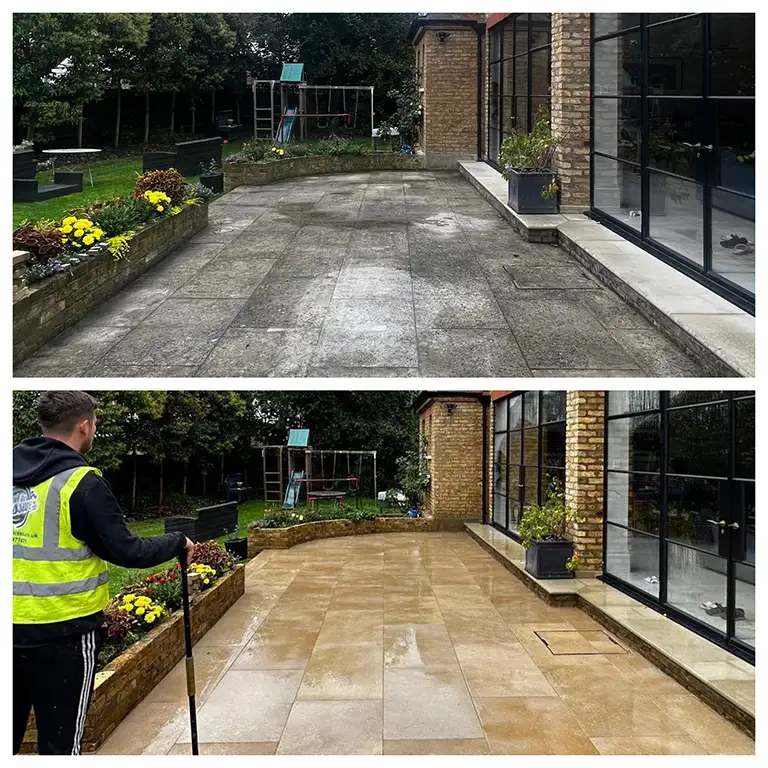
Sandstone patio in Cobham, Surrey, restored using a three-stage patio black spot removal process. Superheated steam killed the spores, followed by a specialist stone cleaner to lift staining, and a final rinse for a spotless, long-lasting finish.

The Hidden Risks of DIY Patio Black Spot Removal

DIY patio black spot removal might look simple online, but in reality, it carries real risks — especially on delicate natural stone, artificial surfaces, or patios with pointing and grout.

Risk 1: Damage to Artificial or Dyed Surfaces
Many cheaper paving products — such as concrete, resin-bound, or reconstituted stone — get their colour from artificial dyes. If the wrong cleaner is applied for too long, these dyes can fade or bleach, leaving the surface permanently patchy or uneven.

Risk 2: Chemical Residues
If bleach-based patio cleaners are allowed to dry out, they can crystallise into a gum-like residue that bonds deep into the pores of stone. Without professional-grade steam cleaning, this residue is virtually impossible to remove — and even when it can be lifted, the surface may already be permanently scarred.

Risk 3: Damage from High Pressure
A jet washer might seem like the quick fix, but it doesn’t kill lichen spores — it only blasts the visible heads off, meaning they regrow bigger and darker. Worse still, high pressure can scar natural stone, etch delicate slabs, and blow out pointing or grout.

Risk 4: Lack of Protective Clothing
Most patio black spot removers contain sodium hypochlorite (bleach), which is highly corrosive. Without gloves, goggles, and suitable clothing, splashes can burn skin, irritate eyes, and even damage lungs if misted in the air. Many DIYers underestimate just how strong these chemicals are — and accidents happen fast.

Risk 5: Cross-Contamination
Once the solution is applied, it sticks to footwear, tools, and clothing. If you walk indoors without changing shoes, you can tread bleach into carpets or hard flooring and cause permanent stains. Outdoors, walking across lawns, wooden sleepers, or decking can leave them bleached white. Even carrying sprayers or buckets through the house risks drips that mark flooring or furniture.

Risk 6: Runoff and Surroundings
Patio black spot removers are corrosive and easily damage anything they contact. Splashes on UPVC or PVC windows and doors can leave permanent orange/red etching, while runoff can burn grass or leave white stains along lawn edges if areas aren’t pre-wet and flushed properly.

Why Professionals Don’t Face These Risks
With professional cleaning, the process is controlled from start to finish. Superheated steam kills spores without damaging stone, specialist cleaners are mixed on the day to suit the surface, and final rinses safely flush away residues. Before starting, I always assess the stone and surroundings to avoid these risks — and I guarantee a safe, spotless, long-lasting finish.

feel_the_pressure_patio_cleaning23.webp

Superheated steam cleaning sandstone patio in Ascot Berkshire. Using DOFF/Therma-Tech equipment, we removed stubborn black spot lichen and restored the natural colour of the stone without causing damage.”

Our Professional Patio Black Spot Removal Service — Safe, Effective & Guaranteed

The only way to remove patio black spot lichen safely and effectively — without risking damage — is with a professional cleaning system. My process combines a proven three-stage method with a tailored approach designed to suit the exact surface type and condition of your patio or driveway. This is what guarantees immaculate, long-lasting results.

Stage 1: Superheated Steam Cleaning

I begin with low-pressure, high-temperature steam using advanced machines such as DOFF, Therma-Tech, or Torik. This kills the lichen spores at their root without damaging the stone. On patios where the black spots are still small and not fully developed, this stage alone can sometimes achieve a clean finish.

Stage 2: Application of Specialist Stone Cleaner

Where the infestation is heavier or older, the spores may be killed by steam but shadows often remain where the lichen once was. At this point, I apply a specialist cleaner designed to draw out these shadows and restore the stone’s natural pigmentation.

Unlike “one-size-fits-all” removers, I don’t just pour on generic chemicals. I mix the solution on the day to match your surface — whether it’s delicate York stone, modern porcelain, or reconstituted concrete. This avoids the risks of over-bleaching and ensures the colour and character of your paving is preserved.

Stage 3: Final Steam Rinse

After the cleaner has worked into the pores, I carry out a final steam rinse. This lifts out the last traces of shadowing, removes any residues, and leaves the surface fully sanitised. The result is a patio or driveway that not only looks spotless but stays cleaner for longer because the spores have been completely killed.

Why My Service Is Different

  • Tailored approach → Every treatment is mixed and applied to suit the stone type and condition.

  • Safe for all surfaces → From delicate natural stone to artificial or dyed paving that can be easily discoloured.

  • Fully sanitised finish → My process doesn’t just clean — it sterilises the surface, slowing regrowth.

  • Choice of systems → DOFF, Therma-Tech, or Torik selected depending on which is most efficient for your patio.

  • Guaranteed results → I don’t leave until the patio or driveway is properly restored. You’ll see the difference straight away.

This is the system behind my Patio Black Spot Removal Service. It’s the reason so many homeowners across London and the Home Counties call me after DIY attempts or “quick cleans” have failed. If you want the job done safely, thoroughly, and guaranteed, this is the method that works.

feel_the_pressure_patio_cleaning53.webp

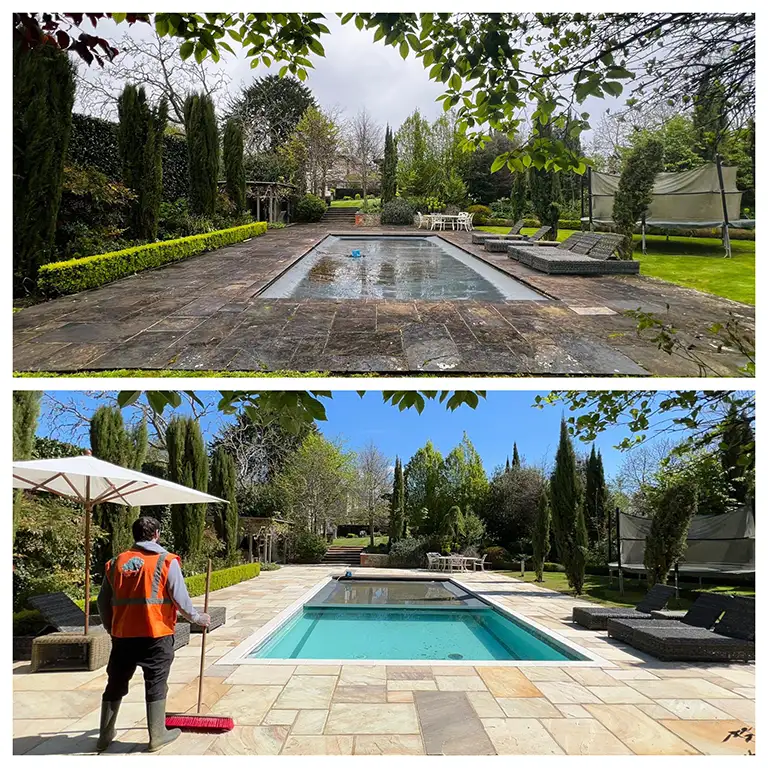
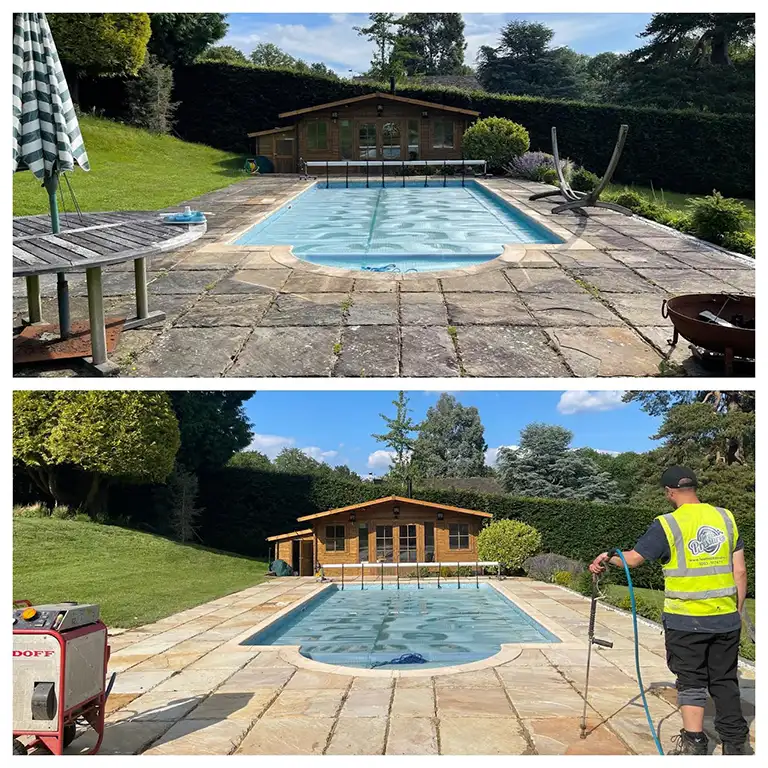
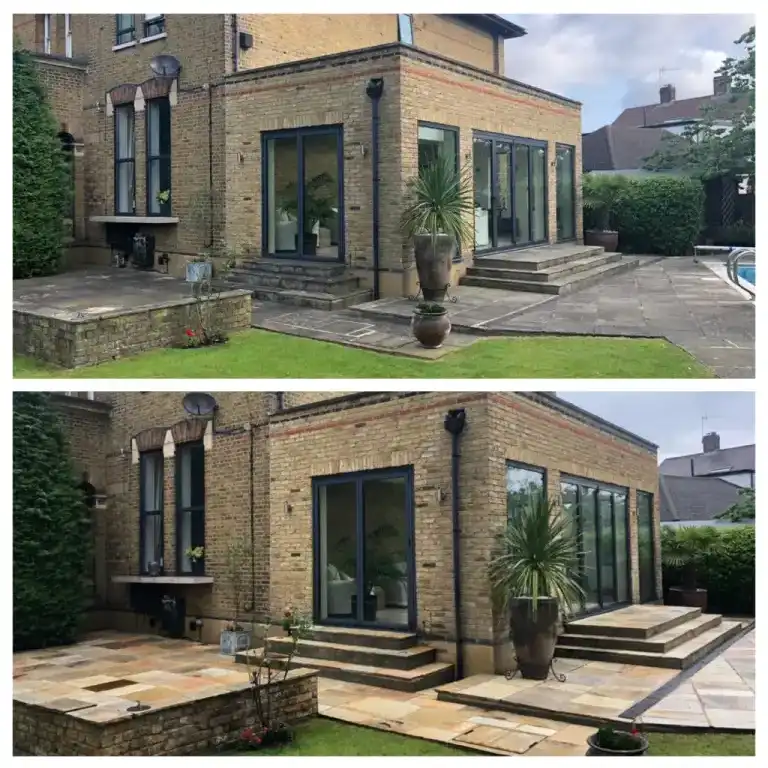
Professional patio black spot removal on a sandstone poolside patio in Winchester, Hampshire. Standard jet washing couldn’t remove the lichen, but our three-stage steam cleaning system restored the stone safely and effectively.

Why Pressure Washing Alone Won’t Remove Patio Black Spot

Many homeowners assume jet washing will solve patio black spot lichen. At first, it often looks like it has: the surface dirt is gone, the paving looks brighter, and the black spots appear lighter. But within weeks, the marks are back — bigger, darker, and even harder to remove.

Why It Doesn’t Work

Patio black spot lichen doesn’t just live on the surface — it anchors itself deep into the pores of stone, block paving, and concrete with root-like filaments. A pressure washer simply blasts the surface “heads” off. The spores remain alive inside the stone, ready to regrow.

This is why patios that have been jet washed again and again often end up looking worse over time. Each blast may give a temporary improvement, but because the spores aren’t killed, they always return.

The Risk of Damage

Using high-pressure cleaning on patios can cause permanent damage:

  • Loose mortar joints → pressure blasts pointing straight out.

  • Etched stone → delicate natural slabs can be scarred by too much force.

  • Patchy finish → uneven pressure leaves the surface streaky and inconsistent.

When Pressure Washing Is Useful

Pressure washing does have its place. For general dirt, algae, moss, and day-to-day grime, it’s a great tool. In fact, my Pressure Washing Service is ideal for those routine cleaning jobs.

But for patio black spot lichen, pressure washing alone will never be enough. The only reliable solution is a three-stage patio black spot removal treatment using superheated steam and specialist stone cleaners. That’s why so many homeowners call me in after repeated jet washing has failed to deliver lasting results.

feel_the_pressure_patio_cleaning13.webp

How to Stop Patio Black Spot Lichen Returning

Once your patio or driveway has been properly restored, the next question is always: “How do I stop patio black spot lichen from coming back?”

The reality is that because black spot spreads through airborne spores, it can’t be prevented forever. But with the right aftercare, you can slow regrowth and keep your patio looking cleaner for much longer.

Simple Prevention Tips

  • Sweep regularly → fallen leaves, soil, and debris trap moisture, which creates the perfect environment for lichen and algae.

  • Rinse occasionally → a quick hose down now and then helps prevent dirt build-up that feeds new growth.

  • Improve drainage → if water pools on your patio, it encourages spores to settle and thrive.

  • Pre-wet during cleaning → when applying any patio cleaner, always pre-wet lawns and borders to prevent staining.

Annual Maintenance

The most effective way to stop black spot from taking hold again is to book an annual maintenance clean. By tackling small spores before they mature, you can avoid the heavy staining and stubborn infestations that need full restoration.

Many of my customers now arrange yearly cleaning after their first full patio black spot removal. It keeps their patios looking immaculate all year round and prevents the frustration of black spots coming back stronger each season.

Don’t Forget Your Driveway

Black spot doesn’t just attack patios — driveways and block paving are just as vulnerable. If you’ve noticed spots spreading to your driveway too, my Driveway Cleaning Service can tackle them before they become embedded.

feel_the_pressure_patio_cleaning1.webp

Limestone patio restored in Sevenoaks, Kent with our specialist black spot removal process. This premium stone was covered in lichen that resisted DIY cleaning, but our low-pressure steam cleaning brought back its natural colour safely.

Final Thoughts: Guaranteed Patio Black Spot Removal

Patio black spot lichen is one of the toughest problems you’ll ever face on stone, block paving, or concrete. DIY methods like jet washing or shop-bought removers might make the surface look better for a short while, but the spores always survive. That’s why the black spots keep coming back — bigger, darker, and harder to remove every year.

My approach is different. I don’t rely on generic products or quick fixes. Instead, I use a professional three-stage system with superheated steam, specialist stone cleaners, and a final sanitising rinse. Combined with years of hands-on experience and the choice of DOFF, Therma-Tech, and Torik machines, it’s the safest and most effective way to restore your patio or driveway.

Every photo you’ve seen in this blog is from my own work — no stock images, no theory. And unlike many companies, when you contact Feel the Pressure, you’ll always be dealing directly with me — Frank Bishop — the person who quotes the job and carries it out.

If you want to say goodbye to patio black spot lichen for good, the safest and most effective choice is my Patio Black Spot Removal Service. For general upkeep against dirt, moss, and algae, my Patio Cleaning Service is the perfect option. And if black spot has already spread to your driveway, I can restore that too with my Driveway Cleaning Service.

Get in touch today and let me restore your patio or driveway properly — with results that are guaranteed.

feel_the_pressure_patio_cleaning9.webp

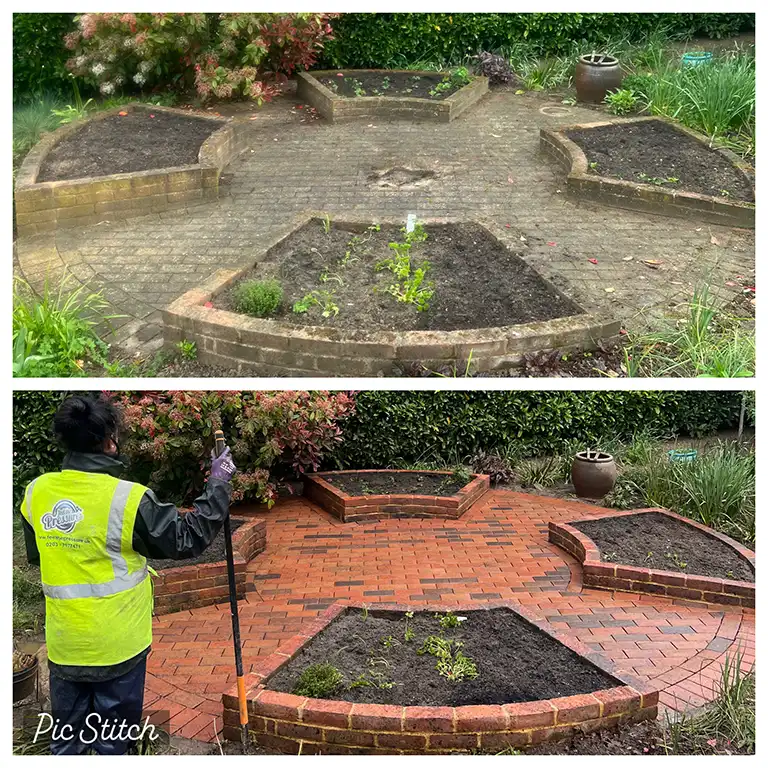
Sandstone patio deep cleaned and fully restored at a luxury home in Chichester, West Sussex. Years of black spot lichen and algae build-up removed with our professional patio cleaning and DOFF steam system.

FAQ

How to Remove Black Spot Lichen from Patios — The Safe & Effective Way Blog FAQS-

How do you get rid of black lichen on patios?-

The safest and most effective way is a professional three-stage process: superheated steam cleaning to kill the spores, a specialist stone cleaner to remove shadows, and a final steam rinse to restore the slabs. DIY methods rarely penetrate deep enough to stop black spot coming back. Learn more on my Patio Black Spot Removal Service page.

What is the best patio cleaner for black spot?+

Most off-the-shelf patio cleaners don’t reach the spores that cause black spot. Professional systems like DOFF, Therma-Tech, or Torik use superheated steam alongside specialist stone treatments for a spotless, long-lasting finish.

Does jet washing remove black spot from patios?+

No — pressure washing only blasts the surface. The lichen spores survive inside the stone and quickly return, often darker and more stubborn. That’s why steam cleaning and specialist treatments are needed.

Will patio black spot remover damage my stone?+

DIY removers can cause problems if used incorrectly, especially on artificial or dyed surfaces. If left too long, they may bleach the colour or leave behind sticky residues. Professional steam cleaning is safe for natural stone and pointing, while still delivering guaranteed results. Find out more about my process on the Patio Black Spot Removal Service page.

Why does black spot keep coming back on my patio?+

Black spot spreads by airborne spores. Unless they’re killed at the root, they’ll reappear every year. Professional removal kills the spores and sanitises the surface, keeping your patio cleaner for much longer.

Show More Show Less

Our Customer Feedback