What a Brick Paint Removal Test Patch Can Tell You Before You Commit


At Feel the Pressure UK, we understand that removing paint from brickwork is a big decision. Before jumping into full-scale removal, many of our customers choose to start with a brick paint removal test patch — a small, controlled trial area that reveals exactly what’s beneath the coating and how well it can be removed.
Whether you’re working with historic brickwork, modern masonry, or painted boundary walls, this simple test gives you confidence in the results and avoids costly surprises later. It's the most reliable way to plan safe, effective paint removal — tailored to your wall.
“Before committing to any full brick cleaning job, our clients appreciate the clarity that a brick paint test patch provides.”
.
Paint can hide a lot: often beautiful original brickwork, but in some cases, also things like cement-based pointing, previous repairs, or areas where moisture may have affected the surface. A test patch gives you a clearer picture of what’s underneath and helps ensure a well-informed, well-planned approach.
At Feel the Pressure, our test patches are a key part of a professional, transparent process. They help us — and you — decide the safest and most successful way forward for your property.
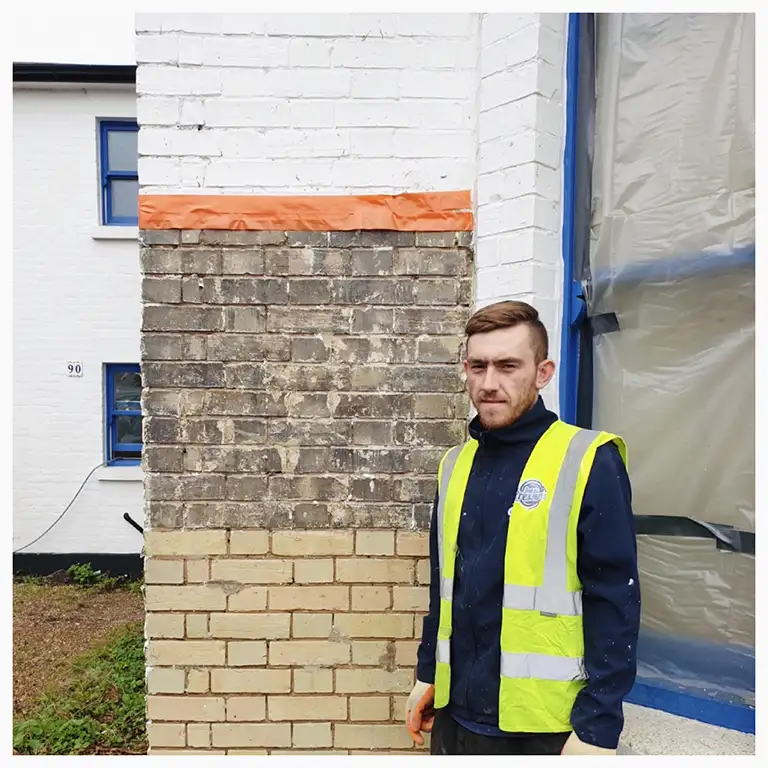
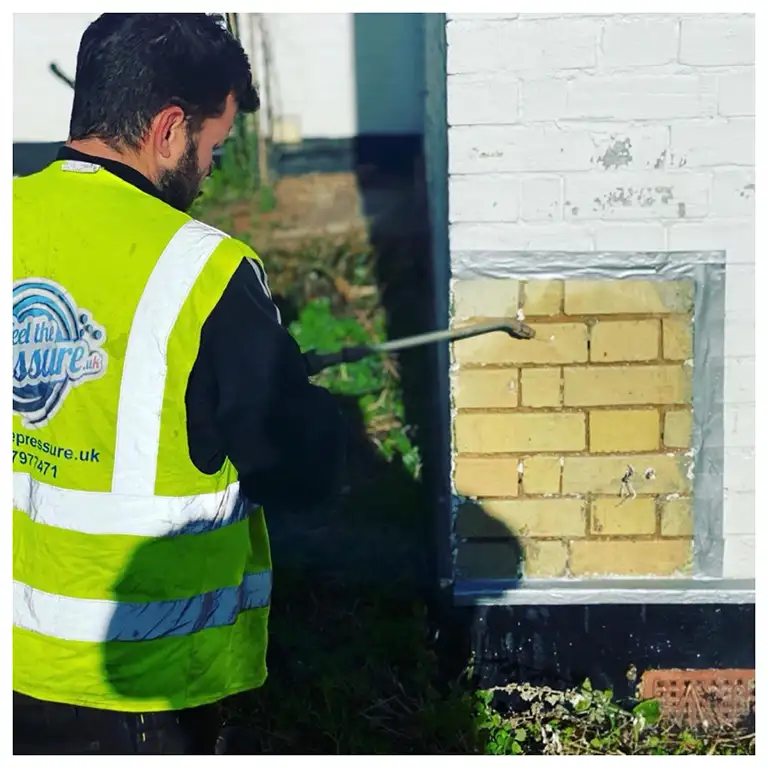
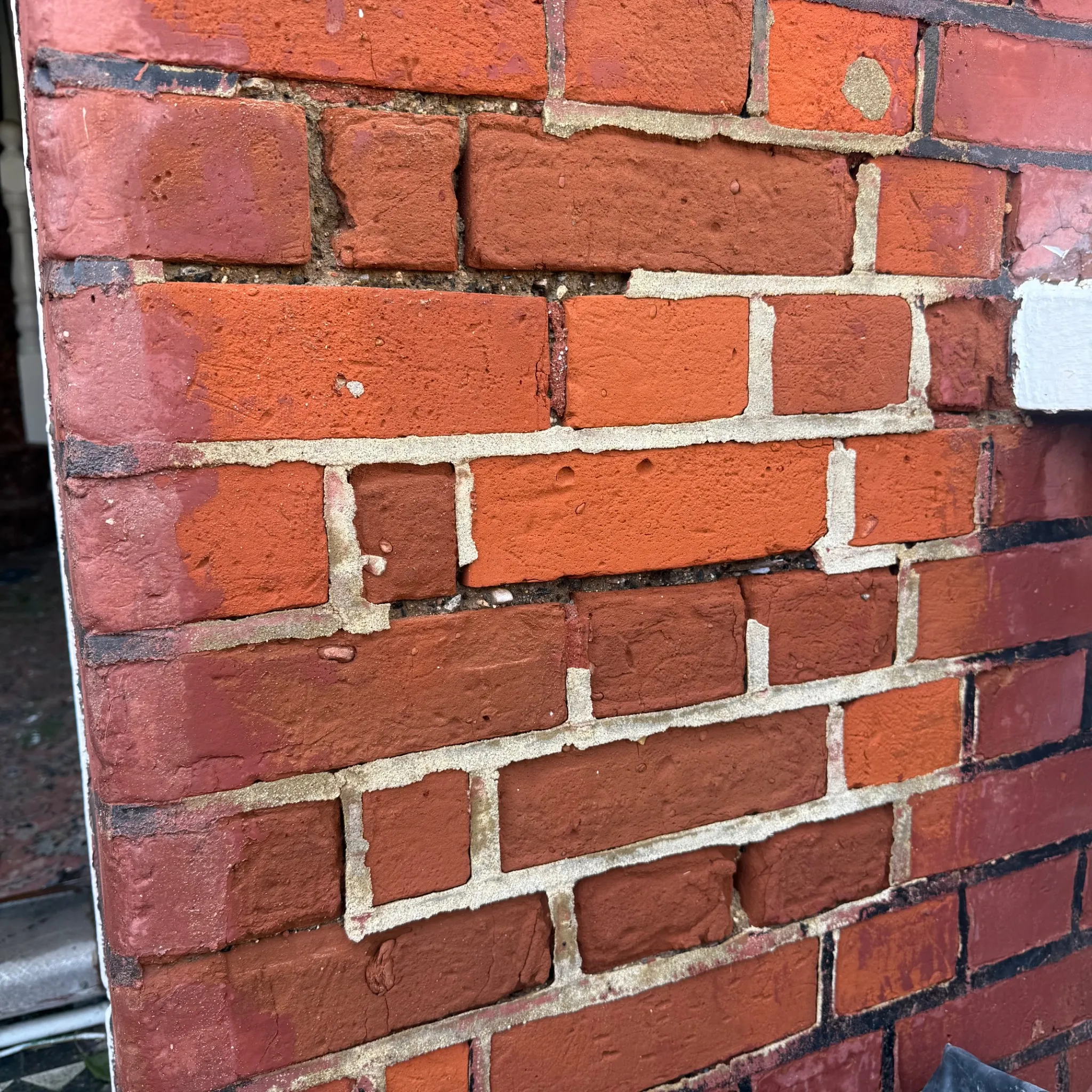
A test patch is a small area — typically 0.5 to 1 square metre — where we apply our recommended cleaning or paint removal method to show you exactly what results can be achieved.
It’s not just a guess. It’s a live demonstration on your actual wall.
We carry out test patches on all types of painted masonry, including brick, stone, and render, and we use this process to:
Confirm which method is most effective
Assess brick and mortar condition
Plan costs and timelines
Show you a before-and-after result in real time
We’re happy to carry out the test patch in a location you choose — somewhere discreet or somewhere visible, whichever makes you feel most confident. And if your property has areas with different brickwork, paint types, or surfaces, we can complete multiple test patches to ensure we get it right across the whole project.
Want to see how a test patch works on your wall? Book a free test patch today →
Before we start, we carefully prepare and protect the area around the test patch to ensure nearby surfaces stay clean and unaffected — the same careful process used for full removals. You can see how this works in our detailed blog Why protection is so crucial in brick paint removal.
You can learn more about the types of paint we remove on our Brick Paint Removal Service page →.
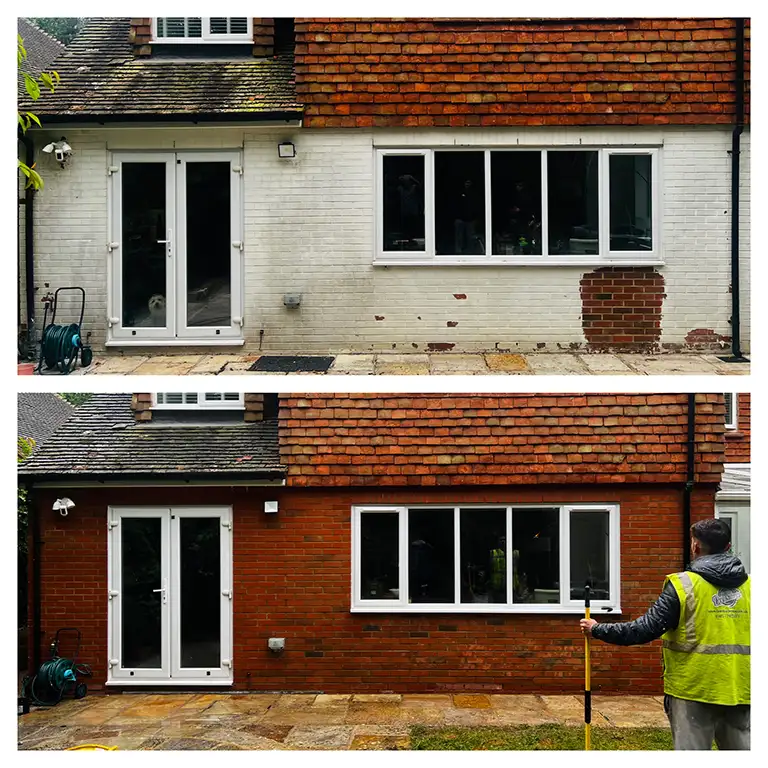
A painted wall might look solid — and often, it is. In many cases, paint is simply hiding well-preserved brick that just needs revealing.
But occasionally, it can cover things like:
Mismatched brick repairs
Loose or crumbling mortar
Moisture issues or signs of frost damage
Discolouration or patchy staining
A test patch helps uncover these early — before full removal begins — so there are no surprises and we can plan the safest, most effective approach from the start.
We frequently come across homes coated in non-breathable masonry paint — a type that traps moisture, leads to internal damp, and gradually damages the brick beneath. For this reason, removing non-breathable paint from exterior brickwork is strongly recommended to prevent long-term structural issues. This is why a test patch is so important — it helps identify whether your existing paint is breathable, how your brick is coping underneath, and whether removal is urgently needed.
Worried your brickwork might be coated in non-breathable paint?
Read our expert guide: Why Non-Breathable Paint Can Seriously Damage Your Brickwork →
Find out how to spot the warning signs, what risks to avoid, and why proper removal can restore your walls and protect your home long term.
Book your free test patch today and find out exactly what’s under the paint — safely, clearly, and with no pressure to commit.
.
“If you’re unsure how well the paint will come off, a test patch for brick paint removal gives instant answers.”
Some paints flake off with ease. Others — especially old vinyl or oil-based coatings — soak into the brick and may need multiple passes and specialist chemicals to lift them.
That’s why we always test first. It avoids surprises for both of us — and ensures you know exactly what to expect.
Want to see your brick’s true condition?
A simple patch test can show you more than any guess.
Request your test patch now →

“Whether the wall is brick, render, or stone — a trial paint removal patch helps us find the safest solution.”
At Feel the Pressure, we’re experts in all leading brick paint removal methods — including DOFF steam cleaning, low-pressure masonry cleaning, and specialist chemical treatments.
Some paints soften and lift with steam alone. Others — especially stubborn coatings like old oil-based or pliolite paints — may require the use of different chemical removers to break them down safely.
That’s where our experience really matters. During your test patch, we’ll assess exactly how the paint responds and choose the safest, most effective approach for your brickwork — adjusting as needed to ensure a clean result with no damage.
Want to see which method works best for your wall?
Book your free test patch today and get expert advice tailored to your property.
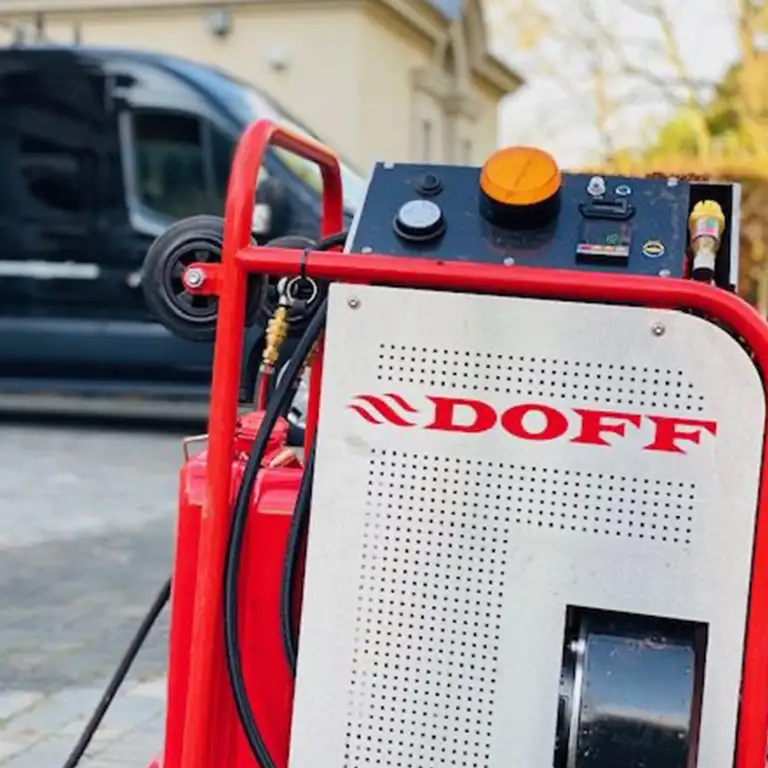
We include a free test patch on the morning of the job for all customers who accept our quotation — so you can see the results first-hand before full removal begins.
If you'd like a test patch in advance, we charge £180, which covers the time, travel, and expert setup involved. However, if you decide to go ahead with us, this amount is fully deducted from your final invoice — meaning the test patch ends up completely free.
Whether it’s one patch or several across different surfaces, we’ll give you a clear picture of what to expect and tailor our plan to suit your wall.
We’ll be upfront and transparent about everything during your initial call or visit — no pressure, no hidden fees.
👉 Already painted brick and want to see what’s underneath? Book your test patch with Feel the Pressure today →

Once we’ve completed your test patch, we’ll provide:
You can take your time reviewing the results before committing to a full removal.
If you decide to move forward, we’ll create a clear plan for full-service paint stripping, cleaning, and brick restoration.
See examples of our full projects in the gallery at the bottom of this page—these all started with a single test patch.
Book your free brick paint removal test patch and see exactly what’s possible — no guesswork, no pressure to commit.
Call Frank directly on 07494 648 181 or send a message here →
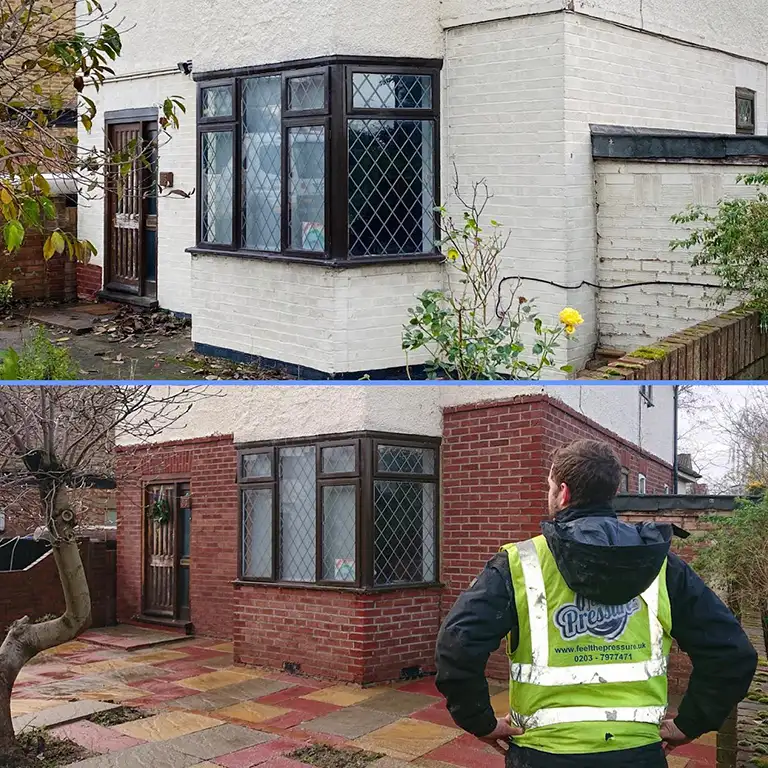
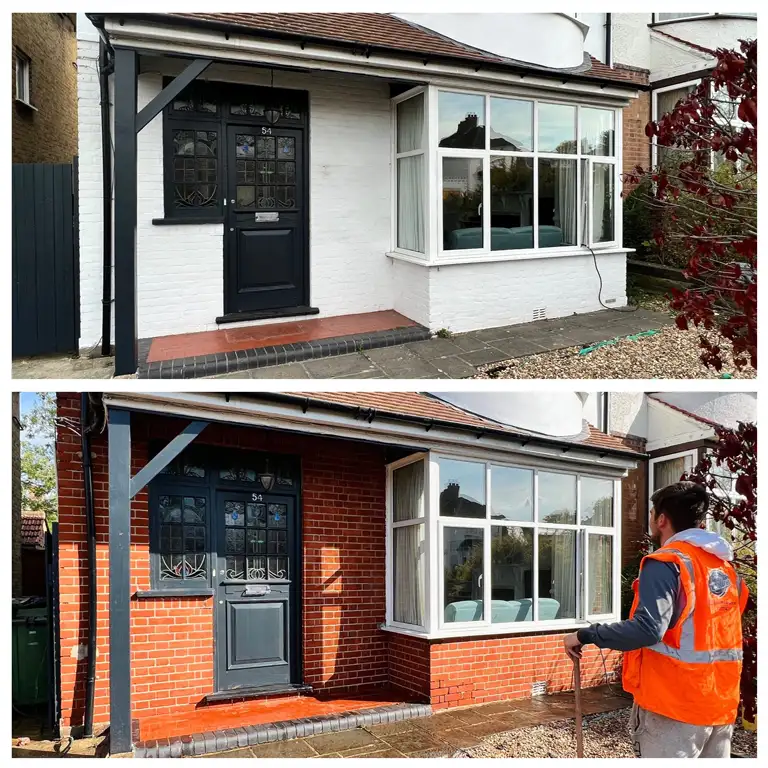
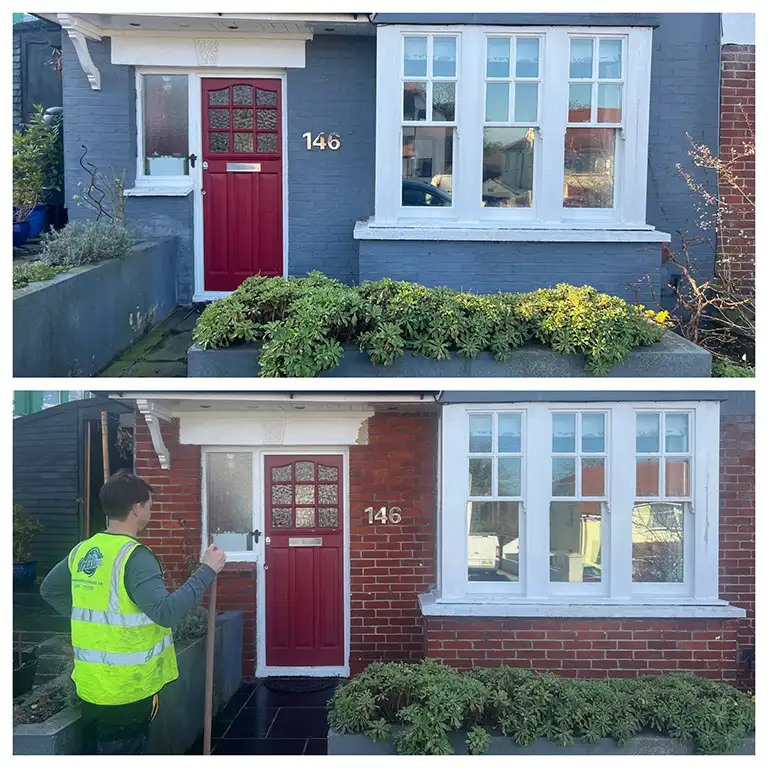
Every full brick paint removal project we take on begins with a test patch.
The homes you see below all started with a simple trial area to assess the paint, check the brick condition, and prove the results before going ahead.
Once approved, we carried out full paint removal — restoring the natural look of the original brickwork safely and effectively.

Yes — if you have different brick types, paints, or repairs in separate areas, we can test multiple spots. We’ll help you decide where during the assessment.
Test patches are free on the day of the job. If you'd like one or more done in advance, we charge £180 — but that fee is fully deducted if you book the full removal service.
Yes. We use DOFF steam cleaning and non-caustic methods designed specifically for sensitive brick, including lime mortar and listed buildings.
Absolutely. Even if you’re removing paint for aesthetics, a test patch shows how the wall will look and ensures the process won’t harm the surface underneath.
In many cases, the brickwork underneath painted surfaces is in surprisingly good condition — especially If the wall hasn’t suffered from trapped moisture. We often uncover well-preserved original bricks that simply need cleaning.
That said, the purpose of a test patch is to check for any hidden issues early on, such as minor repairs or previous pointing work. Most of the time, no major repairs are needed — but if anything is spotted, we’ll explain it clearly and honestly before you commit to full removal.
No pressure — that’s exactly what the test patch is for. You’ll get to see how the brick reacts and what the final result could look like, with zero obligation to proceed. If you’re unsure or not completely satisfied, we’ll talk through your options honestly so you can make the right decision for your home.
If the test patch reveals that the brickwork isn’t in good enough condition for full removal — or if the results aren’t what you were hoping for — we’ll talk you through your options. In most cases, you’ll still get a clear understanding of what’s possible and where any issues lie.
While we don’t repaint over test patches ourselves, we always carry out the patch as discreetly as possible and in an area of your choosing. If needed, we’re happy to recommend a decorator or give advice on breathable finishes that are better for your brickwork moving forward.
Show More Show Less