logo

How to Remove Moss from Roofs Safely — Why Pressure Washing Is the Wrong Choice
Moss might look harmless, but left untreated it can shorten the lifespan of your roof, trap moisture, and lead to costly repairs. Many homeowners ask “what’s the safest way to clean moss off my roof?” — and the answer is not pressure washing.

Instead, safe roof moss removal is done through a combination of manual removal, biocide treatments, and superheated steam systems like DOFF. Each method is tailored to the roof type and ensures your tiles stay protected.

Every photo in this blog is from real roof cleaning projects we’ve completed across London, Essex, Kent, Surrey, Hertfordshire, and the wider Home Counties. No stock images — just genuine results from our own work."

For full details on professional services across London and the Home Counties, visit our main Roof Cleaning Service Page.

feel_the_pressure_roof_cleaning1.webp

Why roof moss is more than just cosmetic damage

Moss on a roof may look like a surface issue, but it causes real long-term problems if ignored. Homeowners often ask “is roof moss bad for my roof?” — the answer is yes.

  • Moisture damage – moss traps water against the tile, increasing the risk of frost damage and leaks.

  • Tile displacement – moss grows under laps and nibs, prising tiles apart over time.

  • Surface erosion – coatings and finishes break down, ageing the roof faster.

  • Blocked drainage – moss falls into gutters and downpipes, causing overflows and damp patches.

  • Algae and lichen spread – moss encourages staining and quick re-colonisation.

Left untreated, moss can cut years off your roof’s lifespan.

feel_the_pressure_roof_cleaning10.webp

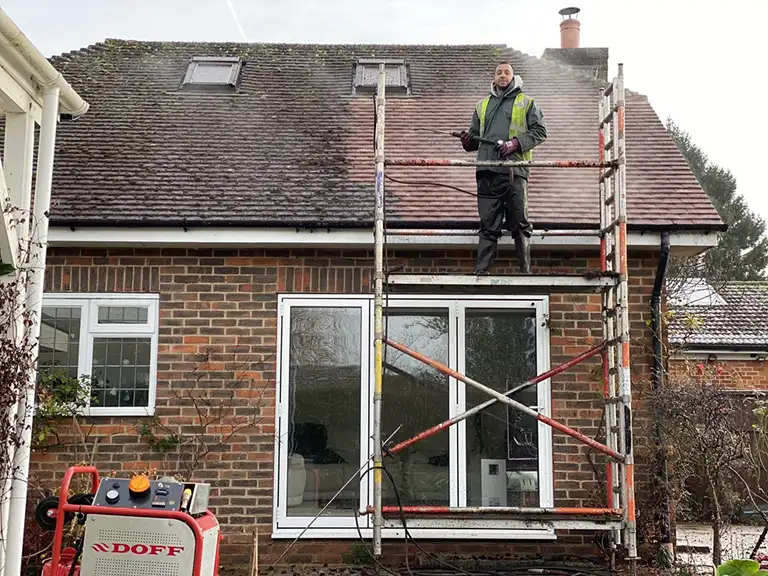
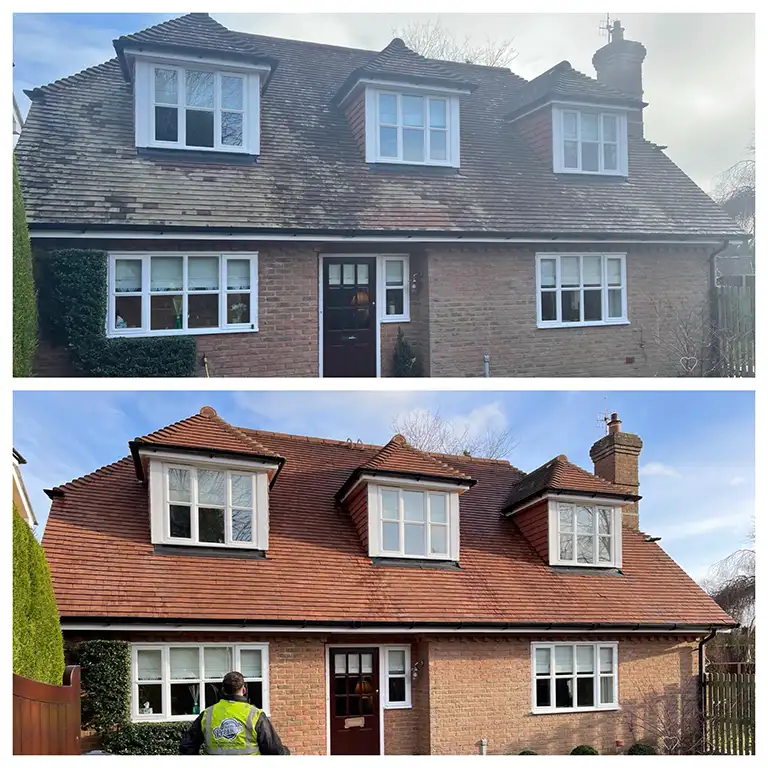
Safe roof moss removal on a clay tile roof in London — DOFF steam cleaning clears moss and lichen safely, prevents trapped moisture, and protects tiles from long-term damage
Why you should not pressure wash a roof

Homeowners often ask “is it safe to pressure wash a roof?” The short answer is no. While it may remove moss quickly, it usually causes more problems than it solves:

  1. Breakage and erosion – high pressure cracks slate and clay, lifts the face of concrete tiles, and strips protective coatings.

  2. Water forced under tiles – jets drive water past overlaps and underfelt, leading to leaks and damp insulation.

  3. Mortar and pointing loss – ridges, verges, and valleys are easily blasted out.

  4. Short-lived results – pressure washing clears visible moss but leaves spores, so regrowth is rapid.

  5. Safety risks – overspray, slippery surfaces, and dirty runoff affect gardens and people nearby.

  6. Insurance concerns – many tile manufacturers and conservation bodies advise against it, and warranties can be voided.

In short, pressure washing a roof can cause costly long-term damage.

Learn more about the difference between DOFF steam cleaning and pressure washing.

feel_the_pressure_roof_cleaning8.webp

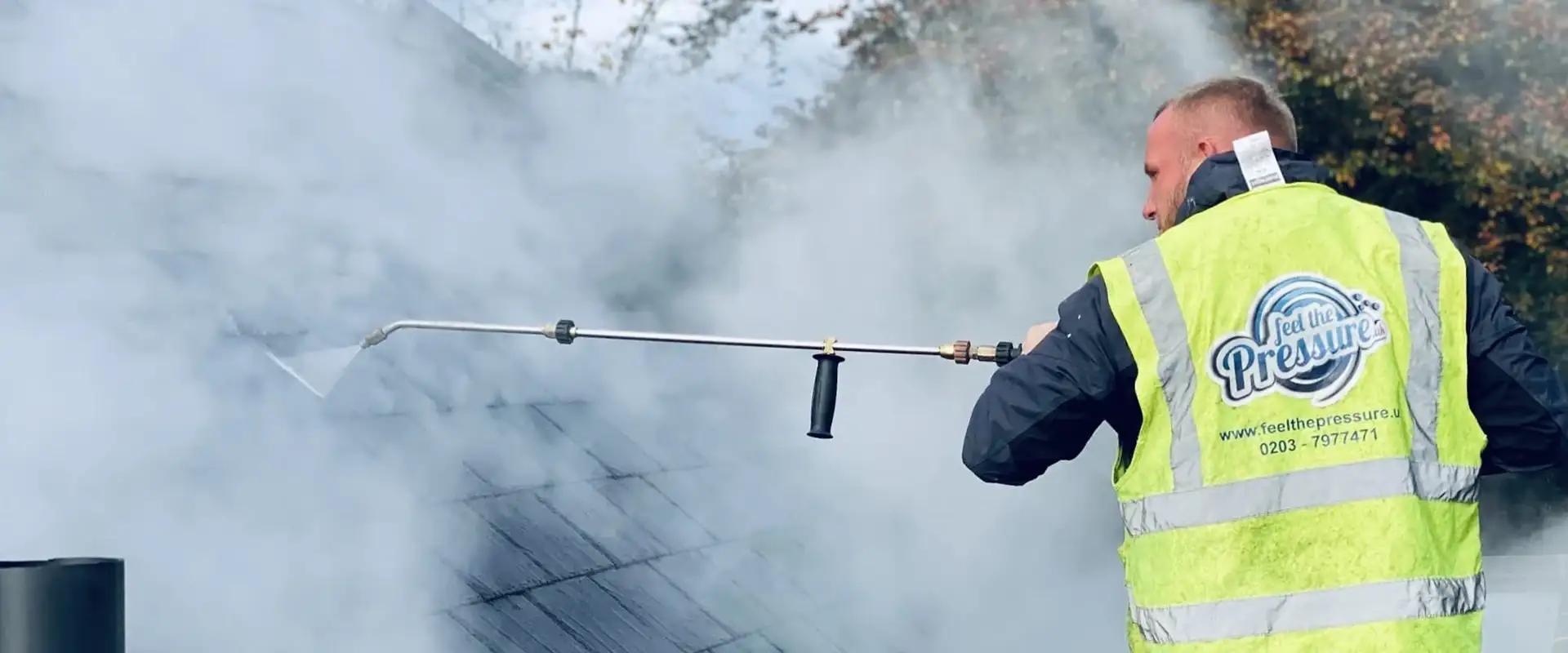
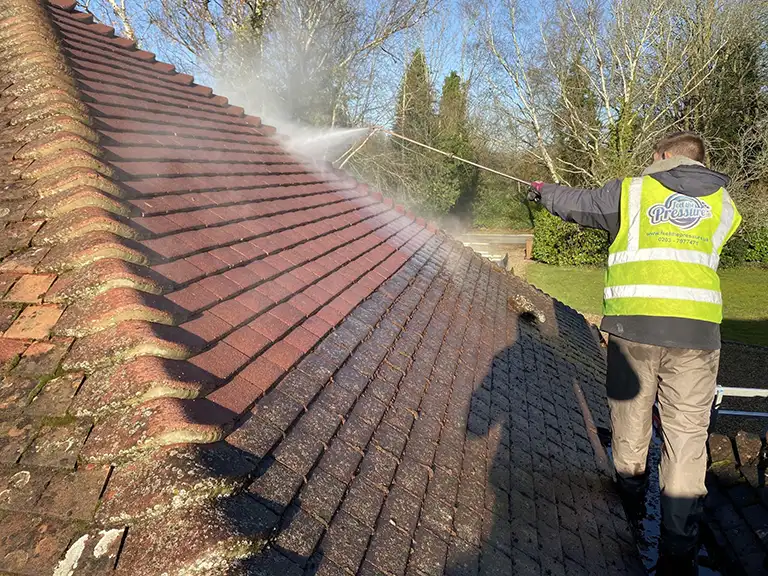
Pressure washing can crack slate or clay roof tiles and strip out mortar joints. Across the Home Counties, we use low-pressure steam cleaning instead — a safe method that removes moss effectively while protecting the roof
Safe alternatives to pressure washing roofs

The good news is there are safer, proven alternatives that protect your tiles and keep the roof breathable. The right method depends on your roof type, but here are the main options:

  1. Manual removal (tile-safe)

    • Special scrapers and brushes remove moss without harming slate, clay, or concrete tiles.

    • Often the first step on older or delicate roofs.

  2. Biocide treatment (prevents regrowth)

    • Applied after physical removal to kill spores and slow regrowth.

    • Works gradually over weeks, keeping the roof clearer for longer.

  3. Superheated steam cleaning (DOFF, Therma-Tech, and Torc systems)

    • These systems use low-pressure, high-temperature steam to gently remove moss, algae, and lichens.

    • DOFF is the best-known, but Therma-Tech and Torc (also called Torik) deliver equally safe and effective results.

    • Unlike pressure washing, steam cleaning kills growth at the root while keeping the roof breathable.

    • Ideal for slate, clay, stone slates, and heritage roofs.

Learn more about one of the most trusted systems here: DOFF Steam Cleaning Service Page.

! Pressure washing should never be used on roofs, but it’s still effective on hard ground surfaces like patios and driveways. Learn more on our Pressure Washing Service Page.

feel_the_pressure_roof_cleaning13.webp

DOFF steam cleaning with biocide treatment on a concrete tile roof in Kent — a safe, long-lasting alternative to jet washing that restores tiles without damage or regrowth.
Choosing the right roof moss removal method

Every roof is different, and the safest way to remove moss depends on the tile type, age of the roof, and overall condition. Choosing the wrong method can damage tiles, strip protective coatings, or shorten the roof’s lifespan — which is why professional assessment matters.

Here’s how the main methods usually apply:

  • Slate roofs – particularly common on Victorian and Edwardian homes, these need a very gentle approach. Manual scraping followed by superheated steam cleaning (DOFF, Therma-Tech, or Torc) is the safest option.

  • Clay tiles – traditional clay tiles can be porous and brittle. Low-pressure steam is ideal, often paired with a biocide treatment to prevent regrowth.

  • Concrete tiles – generally tougher, but still at risk of face loss if pressure washed. Manual removal and biocide treatments work well here, with steam cleaning if needed for heavy lichen.

  • Heritage and listed roofs – always require a specialist low-pressure steam system to ensure the roof remains breathable and undamaged.

For tailored advice on the best method for your roof type, see our Roof Cleaning Service Page.

feel_the_pressure_roof_cleaning4.webp

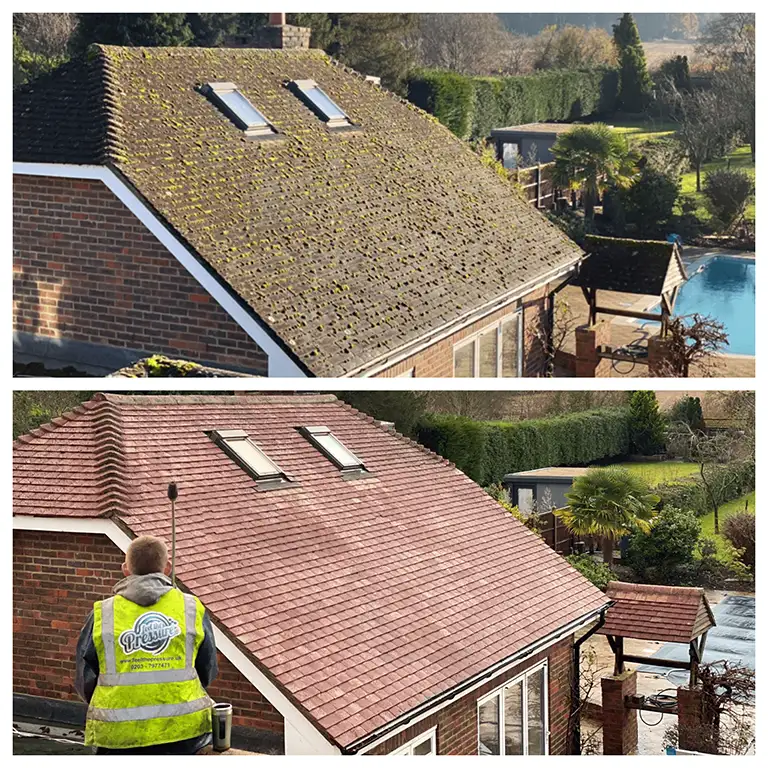
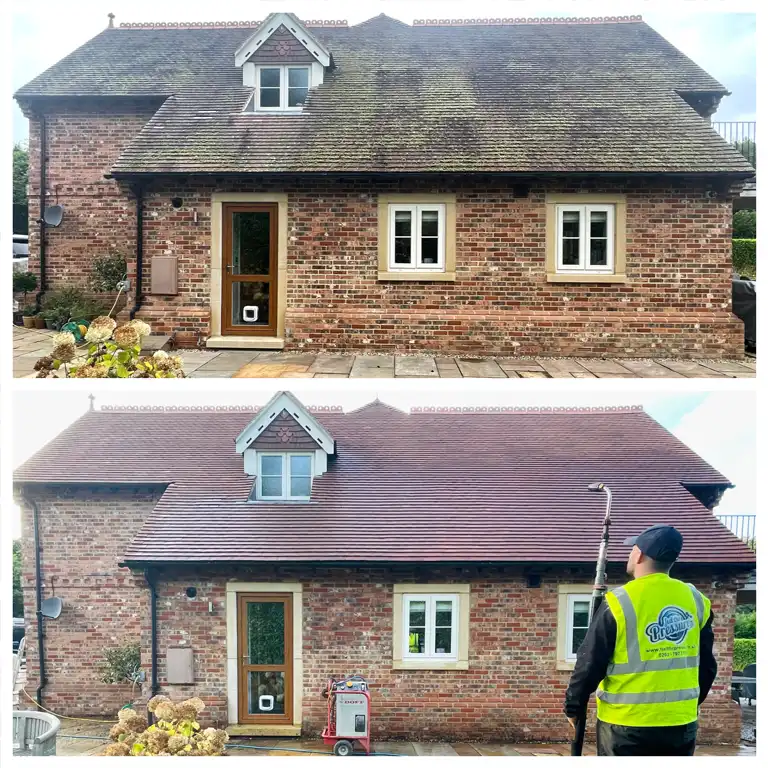
Professional DOFF steam cleaning on clay roof tiles in Surrey — instantly restoring colour and appearance while keeping the roof structure safe and fully breathable.
The risks of DIY roof moss removal and damage

It might be tempting to save money by trying DIY roof moss removal, but the risks almost always outweigh the benefits. Many homeowners search “can I remove moss from my roof myself?” — here’s why the answer is usually no:

  • Broken tiles – walking on fragile slate, clay, or concrete tiles can easily cause cracks or dislodgement.

  • Chemical damage – off-the-shelf cleaners can strip protective coatings, stain tiles, or contaminate gutters and gardens.

  • Unsafe equipment use – DIY pressure washers are just as damaging as professional ones, blasting water under tiles and eroding surfaces.

  • Health and safety hazards – climbing onto a roof without the right equipment poses a serious risk of falls and injury.

The result? DIY often leads to costly repairs and a shorter roof lifespan — wiping out any savings.

t’s far safer to use a professional roof cleaning service that combines the right method with the right safety equipment.

feel_the_pressure_roof_cleaning12.webp

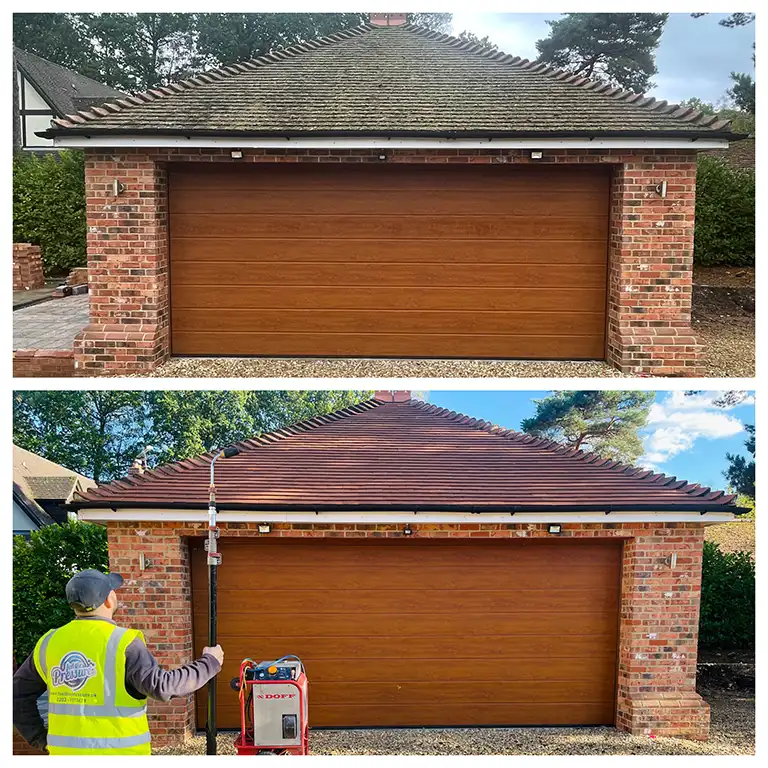
DIY roof moss removal often leads to broken tiles, damaged gutters, and moss regrowth. On this garage roof with concrete interlocking tiles in Essex, our team used safe DOFF steam cleaning to restore it fully and protect it long-term.
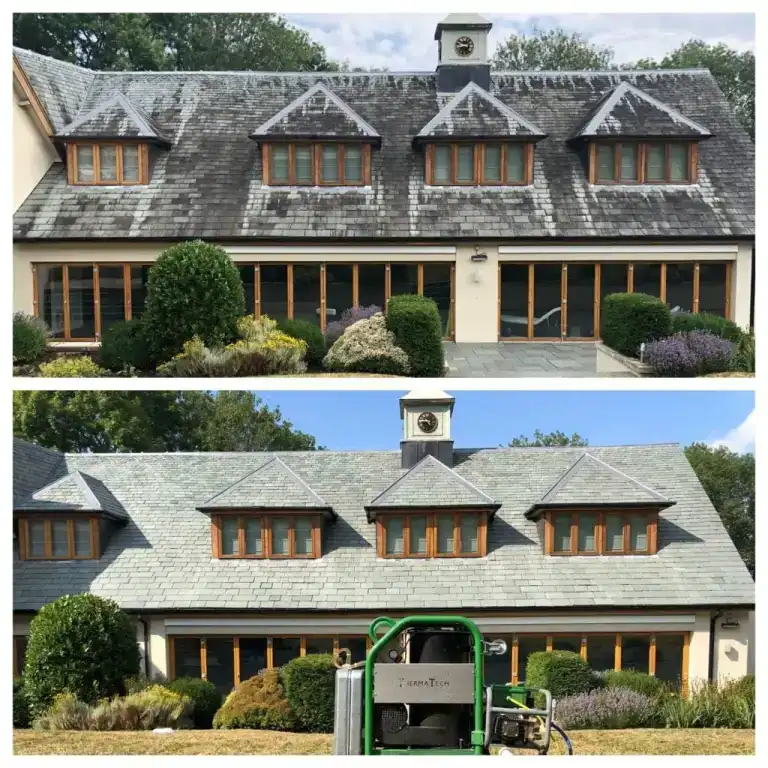
When and why to use biocide roof treatments

Biocide roof treatments are designed to kill moss, algae, and lichen spores that remain after cleaning. On their own, biocides usually take 3–6 months to show results.

By comparison, steam cleaning systems like DOFF, Therma-Tech, or Torik deliver instant results, restoring tiles immediately and killing spores during the process.

The most effective solution is often a combination of both: steam cleaning for instant results, followed by biocide for long-term protection.

Roof moss removal methods compared:

  1. Manual moss removal + biocide – Affordable and effective, but needs treatment to last.

  2. Biocide-only – Cheapest upfront, but slow results (3–6 months before the roof looks clean).

  3. Steam cleaning (DOFF, Therma-Tech, Torik) – Instant results, safest on delicate or heritage tiles, spores killed during cleaning.

  4. Steam cleaning + biocide – The gold standard. Fully restored roof immediately + long-term prevention of regrowth.

This combination is what we recommend for most properties — it ensures your roof looks clean straight away and stays moss-free for much longer.

By combining low-pressure steam cleaning with a follow-up biocide treatment, we’re not only removing moss and algae instantly but also targeting the hidden spores that cause regrowth. This means your roof stays clean for years rather than months, reducing the need for repeat treatments and saving you money in the long run. It’s a proven way to protect your tiles, extend the life of your roof, and keep your home looking its best for longer.

feel_the_pressure_roof_cleaning2.webp

Superheated steam cleaning with a Therma-Tech system, followed by biocide treatment, on a natural slate roof in Hertfordshire — killing moss and algae instantly, restoring tiles to their natural colour, stopping regrowth, and keeping the roof cleaner for years.
How much does safe roof moss removal cost?

The cost of roof moss removal isn’t the same for every property — it depends on the size and pitch of your roof, ease of access, tile type, and the level of moss build-up. Because no two roofs are alike, every job is quoted individually after a free inspection.

As a general guide:

  • Smaller roofs with light moss growth can often be cleaned for a lower cost.

  • Larger or steeper roofs with heavy moss will take longer, which increases the price.

  • Access needs (like scaffolding or towers) may also affect the final quote.

What matters most is using the safest method for your roof. Choosing cheap high-pressure jet washing can lead to cracked tiles, leaks, or damaged pointing — repairs that cost far more than professional cleaning. With our safe methods, you get a roof that’s restored properly and protected for the long term.

To get a tailored price for your home, request a free inspection and roof cleaning quote

feel_the_pressure_roof_cleaning15.webp

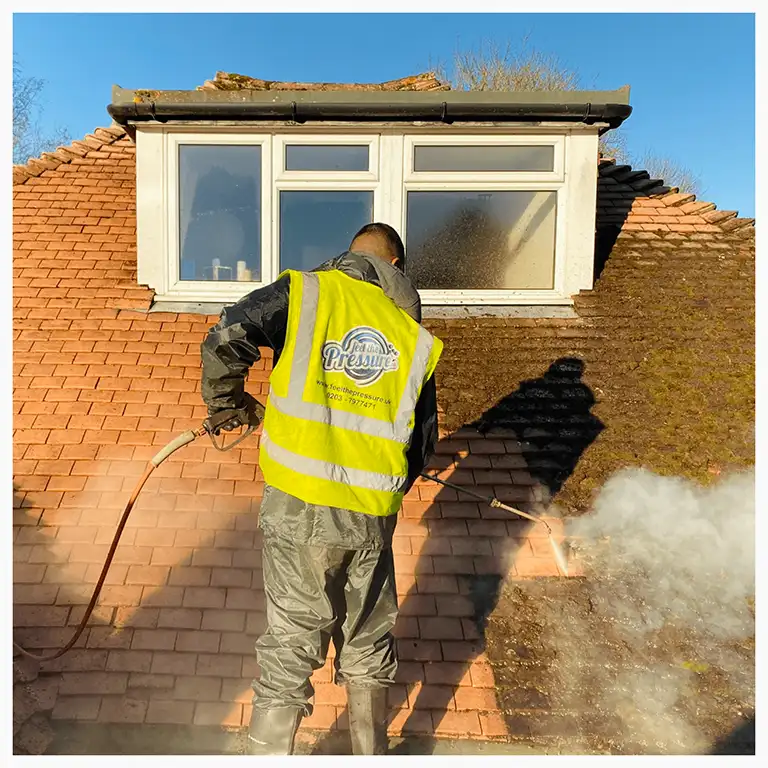
DOFF steam cleaning on a clay tiled roof in Berkshire — delivering instant results while avoiding the damage and costly repairs that pressure washing can cause. A safe, long-term investment for your home.
The bottom line: safe roof moss removal that protects your home

Safe roof moss removal isn’t just about appearances — it protects your home, extends the life of your roof, and helps prevent costly repairs. The safest and most effective methods are manual moss removal, biocide treatment, and low-pressure superheated steam cleaning systems such as DOFF, Therma-Tech, or Torik.

We never use high-pressure jet washing on roofs, because it can crack tiles, damage pointing, and saturate underlay. But that doesn’t mean pressure washing has no place. When used correctly, it’s one of the most efficient ways to clean hard external surfaces like concrete and block-paving driveways, patios, and large commercial areas — places where power and flow make a real difference.

Unlike many blogs you’ll find online, everything here is based on real projects carried out by me Frank Bishop and my skilled team. All images are from our actual roof cleaning work across London and the Home Counties — proof that the methods we recommend deliver results on real homes, not just theory.

Explore our specialist services:


Ready to remove moss from your roof — safely and properly?

Safe roof moss removal isn’t about quick fixes. It’s about protecting your home, extending the life of your roof, and avoiding costly repairs down the line. With the right approach — manual moss removal, biocide treatment, and superheated steam cleaning systems such as DOFF, Therma-Tech, or Torik — you get instant results and long-term protection without the risks of pressure washing.

At Feel the Pressure UK, all of our work is carried out by me, Frank Bishop, with proven results across London and the Home Counties. No salesmen, no subcontractors — just one point of contact who takes pride in every job from start to finish.

Contact us today for your free roof cleaning quote and expert advice. See for yourself why so many homeowners trust us to restore and protect their roofs safely.

feel_the_pressure_roof_cleaning5.webp

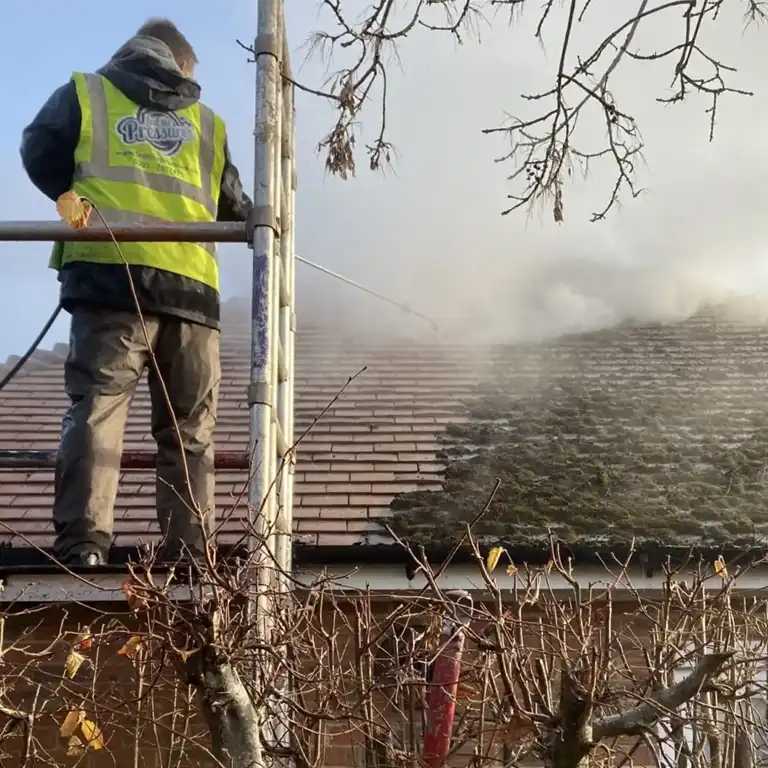
Safe roof moss removal in action — superheated steam instantly clears heavy moss from clay tiles without damage. The result is a clean, protected roof that lasts longer and saves on future repair costs.

FAQ

Safe Moss Removal Blog-

Is roof moss removal safe for all roof types?-

Yes — when carried out with the right method. We never use high-pressure jet washing, which can crack tiles and damage pointing. Instead, we use safe methods like manual moss removal, biocide treatments, and superheated steam systems such as DOFF, Therma-Tech, or Torc. Learn more on our Roof Cleaning Service Page.

How long does it take to see results from biocide roof treatments?+

Biocide on its own usually takes around 3–6 months to kill moss and algae, with the growth gradually washing away in the rain. Steam cleaning gives instant results, and when followed with biocide, your roof stays cleaner for much longer.

What is the best method for roof moss removal?+

The best method depends on your roof type, but the safest approaches are manual moss removal, biocide treatments, and low-pressure superheated steam cleaning systems like DOFF. These protect your tiles and deliver long-lasting results. Learn more on our Roof Cleaning Service Page.

Why shouldn’t you pressure wash a roof?+

High-pressure jet washing can strip away the protective surface of roof tiles, force water under the tiles, and damage pointing or underlay. That’s why we never use it on roofs. However, it is effective for patios, driveways, and other hard surfaces — see our Pressure Washing Service Page

How long will my roof stay clean after moss removal, and will moss come back?+

Moss and algae can regrow over time, especially on shaded or damp roofs. However, with safe methods like steam cleaning followed by biocide treatment, your roof can stay clean for 3–5 years or more. This combination kills spores instantly and slows regrowth, keeping your roof protected for longer.

What time of year is best for roof moss removal?+

Roof moss can be removed year-round, but spring and summer are ideal. Warmer, drier weather helps biocide treatments work more effectively, while steam cleaning gives instant results in any season. Planning work in fair weather also minimises disruption and ensures faster drying times.

Can moss damage a roof if left untreated?+

Yes. Moss traps moisture against the tiles, which can lead to cracks, frost damage, and even leaks over time. It also blocks gutters and downpipes. Removing moss safely protects the structure of your roof and extends its lifespan.

What’s the difference between roof cleaning and roof moss removal?+

Roof moss removal focuses on eliminating moss, algae, and lichens from the surface of tiles. Roof cleaning can include moss removal, but also addresses dirt, staining, pollution build-up, and often includes a biocide treatment for long-term protection. Learn more on our Roof Cleaning Service Page.

Show More Show Less

Our Customer Feedback