logo

What to Expect After Brick Paint Removal

I’m Frank Bishop, founder and lead cleaner at Feel the Pressure UK, and I’ve been providing the very best in brick paint removal, brick cleaning, and brick restoration services for over 15 years.

Over that time, I’ve personally restored hundreds of residential and commercial properties across London, the Home Counties, and surrounding areas — from classic London yellow stocks to delicate soft red rubbers, textured brick, and handmade bricks. We’ve restored them all.

Before starting any full-scale paint removal, I always carry out a detailed inspection and give each customer my honest, experienced opinion on how their brickwork is likely to look once the paint is removed.

If we notice any visible signs of poor-quality restoration work or anything that stands out, we’ll always talk it through with you before any work starts. These can include mismatched pointing styles, heavily filled or over-repaired areas, and patches where damaged brickwork has been hidden under layers of paint.

doff_brick_paint_removal_london_before_after.webp

Why We Always Start with a Test Patch

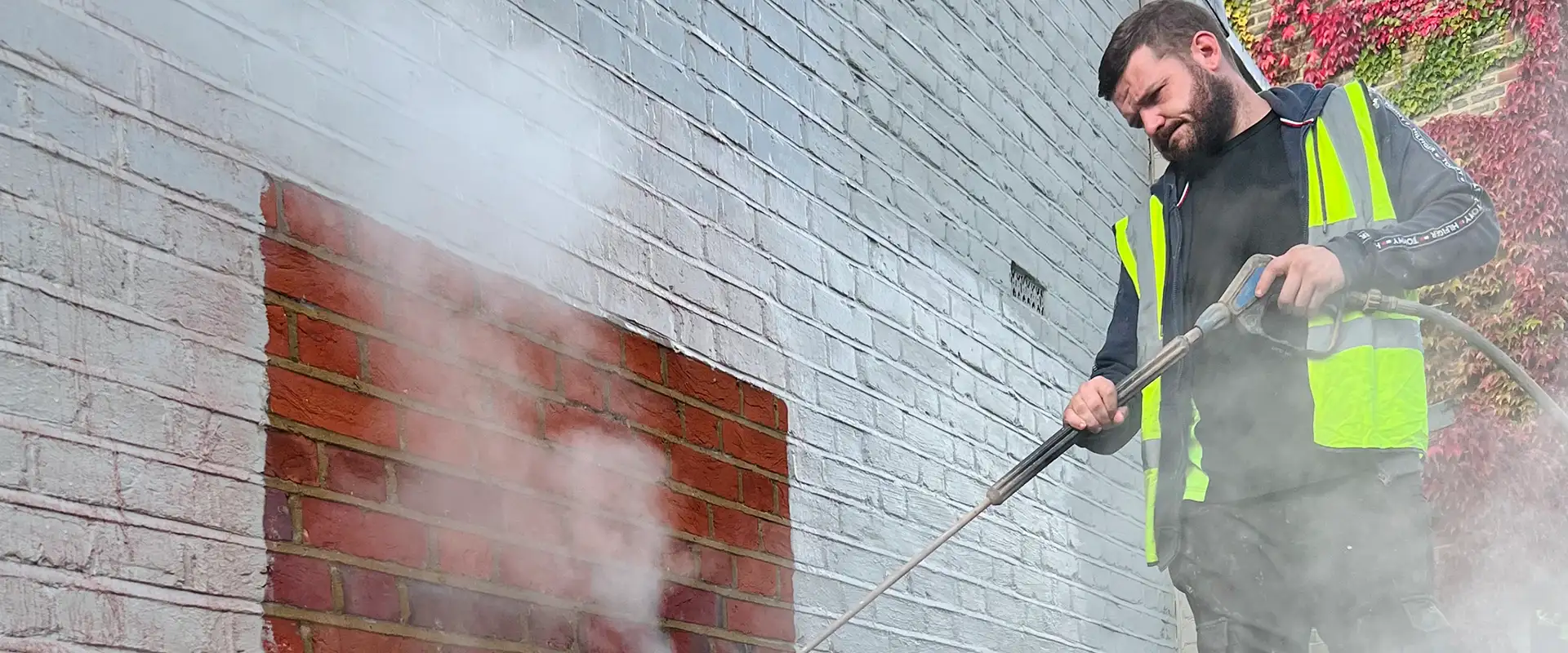
Before starting any full paint removal, I always carry out a small test patch. It’s the most reliable way to get a better understanding of the brickwork beneath the coating — revealing its true condition and giving both you and me a clearer idea of what we’re working with.

Paint can often hide a lot more than people realise. Beneath the surface, there could be previous repair work, mismatched mortar, or areas where the bricks have weathered differently over time. During the test patch, I also look closely at the natural colour and surface condition of the bricks, and whether there are carbon deposits or staining that might influence the overall finish once the paint is gone.

The number of paint layers and how long they’ve been on the wall can also affect the condition underneath. The thicker and older the coatings, the more likely they’ve trapped moisture or caused surface damage over time.

In some cases, especially on older properties, the test patch might also reveal a cement-based mineral coating beneath the modern paint. These coatings are usually brittle but breathable, and while they can’t be fully removed without damaging the surface, they often remain stable once the non-breathable paint above is stripped away. We’ll cover these coatings and the restoration options — including breathable repainting or rendering — later in this guide.

At this stage, it’s simply about understanding what’s there — not deciding on any extras. Most customers wait until the majority of the paint has been removed before deciding whether they’d like additional brick cleaning to brighten the wall further or leave a bit of its original character.

That said, even after a test patch, other areas can still vary. Some sections may have been repointed or repaired at different times, and brickwork that looks identical on the surface can behave differently once exposed. The test patch helps set realistic expectations and gives you a good idea of the overall condition — but the full picture only becomes clear once the entire wall is revealed.

It also helps me plan the right approach for your brickwork — from the method or combination of methods we use, to the pressure levels and water flow rates. This ensures we achieve an effective paint removal while being as delicate as possible at all times.

If you’d like to understand the process in more detail, you can read our dedicated guide here:
Brick Paint Removal Test Patch — Why It’s Essential Before You Start

brick_paint_removal_image_optimised.webp

Every project begins with a detailed test patch — giving a clear preview of how the paint will strip and what the original brickwork will look like once fully restored.”

When the Brickwork Comes Up Pristine After Paint Removal

It’s always very satisfying for our team when we remove paint from brickwork and find that it’s in excellent condition — clean, solid, and full of character, with absolutely no need for any restoration work. This is quite often the case when the brickwork has been well built, with no poor repairs — if any at all — and without too many modern coatings being applied. In general, the fewer layers of paint and the less time it’s been left on, the greater the chance the brickwork beneath will still be in perfect condition. Not only is it visually pleasing, but it also means there’s no further expense for you, the customer.

Once the paint is gone, the brickwork already looks complete. The tone is natural and even, the pointing is sound, and the wall already appears freshly restored. From there, it’s just a case of letting it breathe and dry naturally, allowing the colour and texture to settle back over the following days or weeks.

Because the DOFF and Therma-Tech steam cleaning systems we use are specifically designed for heritage brick and stone cleaning, they not only remove paint safely and delicately without causing damage, but also clean the brickwork — removing any organic staining and surface dirt while preserving the original face of the brick and mortar joints.

The only thing steam cleaning alone can’t fully remove is heavy carbon staining, if present. This may require additional specialised cleaning, but it’s always down to customer preference. Some people like their brickwork to retain a bit of character and age, while others prefer it to look as clean and new as possible. We always talk customers through all options on the day, giving our professional and experienced advice. We then explain these options in more detail in our dedicated Brick Cleaning section below.

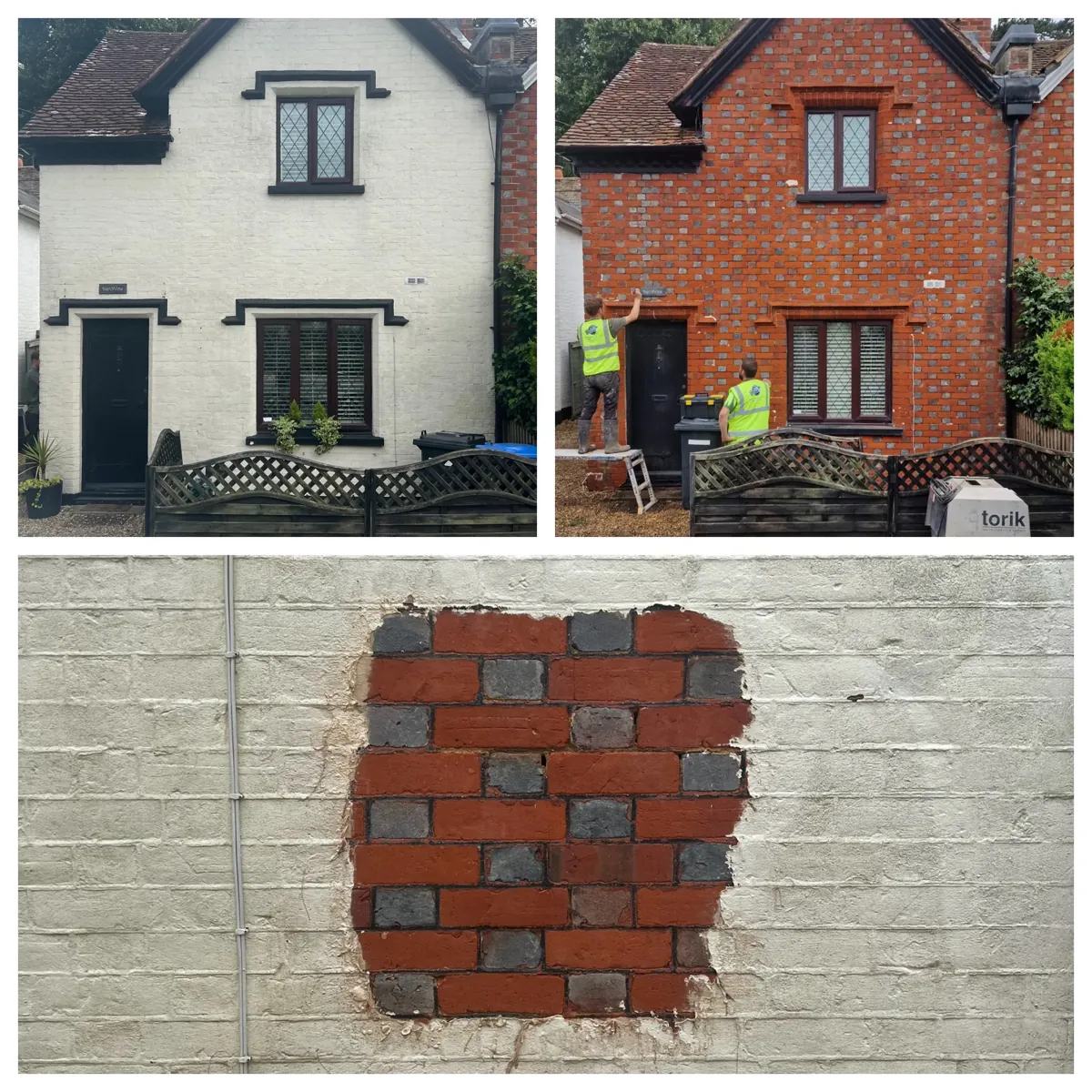
All of the before-and-after photos in our gallery below were taken by myself at the end of each job — with no restoration work or editing involved. What you see there is exactly how the brickwork looked immediately once the paint was removed.

brick_paint_removal_bungalow_before_after.webp

After paint removal, this property revealed perfectly preserved brickwork — clean, solid, and full of character, with absolutely no restoration needed.

When Additional Brick Cleaning May Be Needed

In some cases, once the paint has been removed, the brickwork may still benefit from additional cleaning. This isn’t about removing leftover paint — all paint is effectively removed during the brick paint removal process. Instead, this type of cleaning is purely aesthetic and entirely down to customer preference.

As we mentioned above, some customers prefer to keep a bit of the property’s character and age, while others like to have the brickwork looking as clean and fresh as possible — almost like the day it was built.

The thing with brick paint removal is, you never truly know how the bricks will look underneath until the paint has been fully stripped away. Some walls dry back evenly and look perfect straight away, while others may show light visible carbon staining, heavier darkening, or anything in between. Whatever carbon deposits were on the brick when it was first painted will still be there once the paint is removed. These deeper stains can’t be lifted with steam alone and may need additional chemical-assisted cleaning to fully remove them.

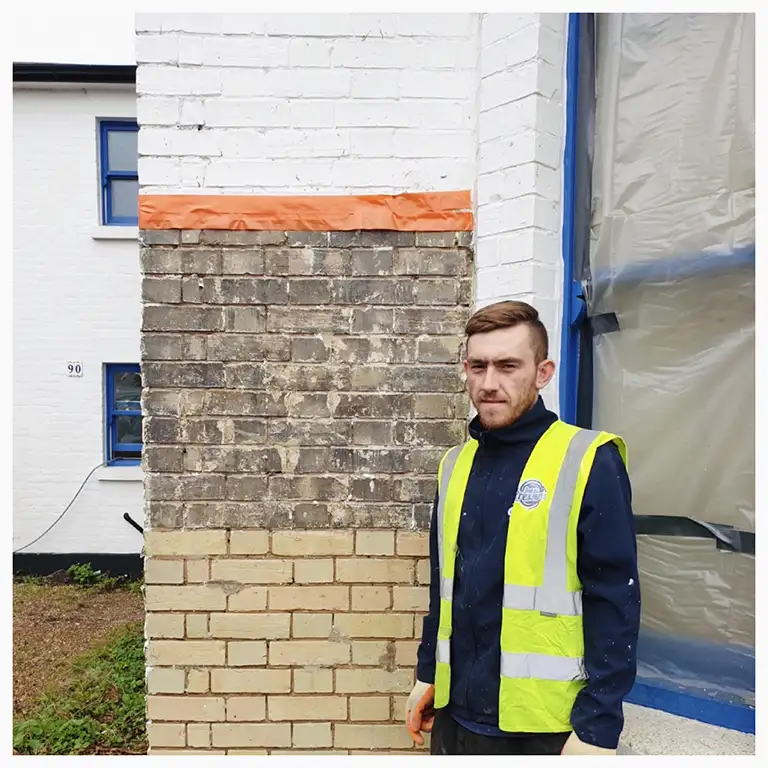
You can see a great example of this in the photo below. Here, we removed a section of white paint to reveal heavily stained yellow stock bricks underneath. During the test patch, we carried out a small area of chemical-assisted cleaning after removing the paint, as the customer wanted the carbon staining completely removed. This allowed us to show exactly how well the staining could be lifted and what finish they could expect once the full job was complete. This way, there were no surprises — the customer knew exactly what the final result would look like before any larger-scale work began.

As with all our projects, we offer a 50% discount on any brick cleaning services when carried out in conjunction with brick paint removal. It’s a great way for customers to restore the natural colour of their brickwork at the same time as having the paint safely removed.

feel_the_pressure_brick_paint_sample2.webp

During testing, we removed white paint to reveal heavy carbon staining beneath. A small area of chemical-assisted cleaning was carried out to show the customer the full restoration potential before work began.

When Brick Restoration or Repointing May Be Needed

In some situations, once the paint has been fully removed, areas of previous repair work or weakened pointing can become visible. Paint often hides older patchwork or mismatched mortar, so when it’s stripped away, you’re finally seeing the brickwork in its true condition — both the good and the bad.

Sometimes, what appears to be a solid, uniform wall under paint may actually include sections that have been over-filled, repointed in cement, or repaired in a different colour or texture to the original lime mortar. When the paint is removed, these differences stand out more clearly.

It’s important to remember that this doesn’t mean the brickwork has been damaged by the cleaning process — it’s simply revealing what was already there. The DOFF and Therma-Tech steam cleaning systems we use are designed specifically for heritage surfaces, operating at low pressure and controlled temperatures to prevent damage. However, in some cases, cracked or weakened mortar can be knocked out of place during paint removal, especially if the paint had been holding it together. Once that coating is gone, those joints may need repointing or minor restoration to bring the wall back to full strength and appearance.

Depending on the condition, this can range from small, localised repointing to more detailed restoration using carefully matched lime mortar. We always assess this once the paint is removed and, if needed, talk you through the options before any work continues. Our goal is always to leave the wall both structurally sound and visually consistent, restoring its natural character without unnecessary intervention.

brick_test_patch_optimised.webp

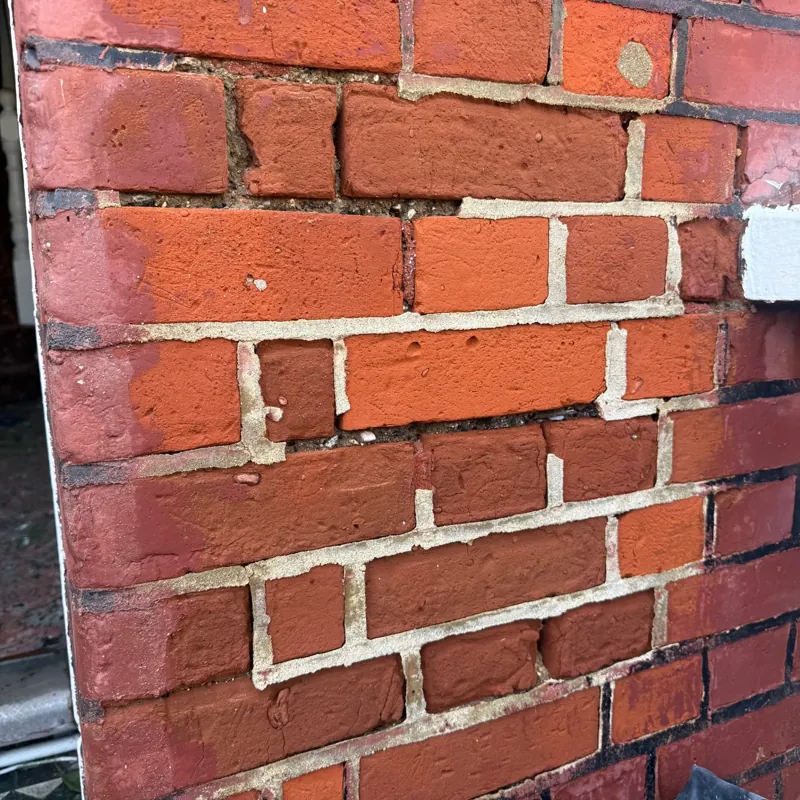
Example of brickwork after paint removal showing mortar and brick deterioration — key signs that restoration services will be required.

When Older Mineral or Cement-Based Coatings Are Found Beneath Paint

On some properties — particularly older or previously restored buildings — we occasionally find mineral-based or cementitious coatings beneath the outer layer of paint. These coatings are completely different from modern paints. They’re designed to bond permanently to the brickwork, providing a long-lasting, breathable protective finish that allows moisture to escape while shielding the surface from weathering.

Because of how they’re made, these coatings cannot be removed with steam or chemicals. The only way to take them off would be through aggressive abrasive methods, which would cause severe and permanent damage to the brickwork — literally grinding away the surface of the bricks. That’s why full removal is never recommended. These coatings were applied as a durable, breathable layer, and in many cases, they’re still doing their job decades later.

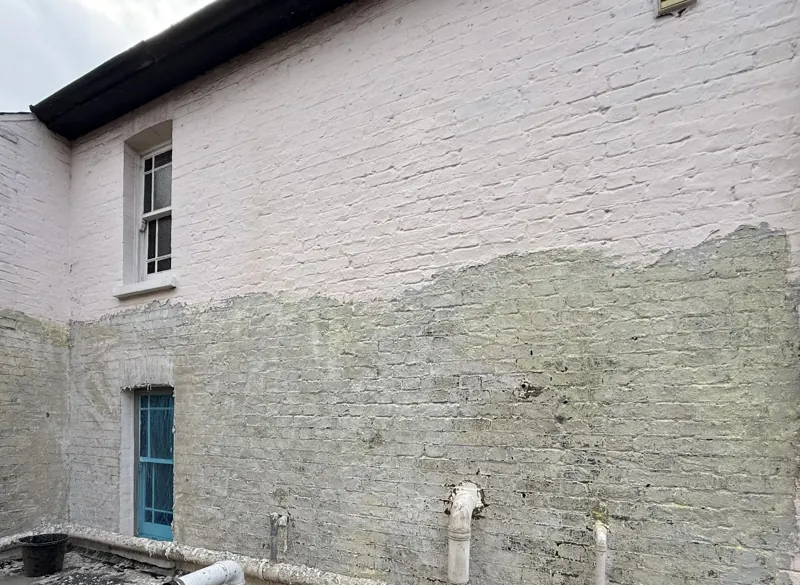
The image below shows a clear example of this. The top half of the wall still has a modern pink non-breathable coating, while the bottom half has been stripped back to reveal the original mineral-based cementitious coating beneath. This older coating is breathable and protective, but it cannot be removed without damaging the bricks — so it’s best left in place.

The problem arises when a modern, non-breathable paint has been applied over the top. Non-breathable coatings trap moisture within the breathable mineral layer and the brick beneath. As that trapped moisture freezes and expands, it causes cracking, flaking, and surface damage — the same kind of deterioration you’d see when non-breathable paint is applied directly to brickwork.

When the outer coating is removed, any cracked or weakened sections of the underlying mineral-based layer can be knocked loose, just like damaged pointing or spalled brick. The result is often a patchy mineral coating that can’t be restored to bare brick without causing further harm to the surface.

For more on this topic, see our related guide on non-breathable paint damage.

In these cases, the best solution is to repaint using a compatible breathable mineral-based coating, restoring a consistent appearance while maintaining full breathability. Another option is to apply a breathable render system over the existing coating for a uniform finish. However, complete removal of cementitious coatings is never advised, as doing so would cause unnecessary and irreversible damage to the brickwork.

cementitious_coating_under_modern_paint_brick_example.webp

This photo shows a wall halfway through paint removal — the top section still covered in modern, non-breathable paint, and the lower section revealing the original breathable cementitious coating beneath.

What Happens Next

No matter what lies beneath the paint, my goal is always the same — to bring your brickwork back to its best condition safely, honestly, and with the right approach for its age, type, and history.

Every wall tells its own story. Once the coating is removed, I’ll walk you through exactly what we’ve found and discuss the best next steps — whether it’s already perfect as it is, could benefit from a gentle clean, or needs some careful restoration to bring it back to life.

Whatever we uncover, you can be confident that we can restore your brickwork to the finish you want — from aged, characterful brick carefully revived, to clean, freshly restored walls that look as good as new. Where required, we also carry out full heritage repointing and repairs, offering a wide range of traditional, classic, and modern pointing styles to match each property perfectly. Our aim is simple: to deliver the exact result you’re after, with workmanship that lasts.

feel_the_pressure_brick_paint_removal15.webp

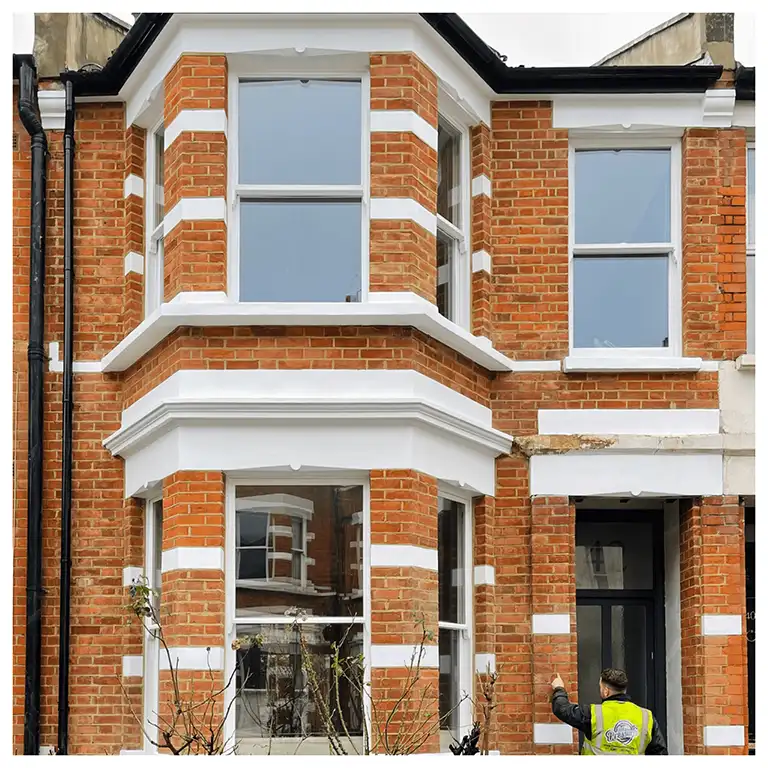
No matter what’s found beneath the paint, we’ll always bring your brickwork back to its very best — safely, honestly, and with the care it deserves.

Talk to Frank at Feel the Pressure UK

When you contact Feel the Pressure UK, you’ll be speaking directly with me, Frank Bishop — the person who quotes, plans, and carries out the work. There’s no sales team, no subcontractors, just genuine, experienced service and a pride in every finish.

With over 15 years of hands-on experience in brick paint removal, cleaning, and restoration, I’ll make sure your brickwork is treated with care, respect, and attention to detail — and that you feel confident and informed at every stage of the process.

I personally cover London, Essex, Kent, Surrey, Sussex, Hertfordshire, and all surrounding Home Counties, offering honest advice, expert paint removal, and restoration that lasts.

Get in touch today to arrange your free brick paint removal test patch and no-obligation quote.

Our Customer Feedback