logo

Chemical-Assisted Brick Cleaning

Chemical-assisted brick cleaning is used where brickwork is affected by heavy, ingrained staining that cannot be safely removed using brick steam cleaning alone. This includes black carbon staining, long-term atmospheric pollution, and deeply embedded environmental soiling that bonds within the brick surface over time.

When carried out correctly, chemical brick cleaning allows these stubborn contaminants to be broken down and removed without damaging the brick face, mortar joints, or the breathability of the masonry.

At Feel the Pressure UK, chemical-assisted brick cleaning is always assessment-led and only used where it is genuinely required.

Every project begins with a detailed inspection and a free test patch, carried out personally by me, Frank Bishop, with over 15 years’ experience in all types of professional brick cleaning services across London and the Home Counties. This ensures the correct approach is chosen for your brickwork, whether chemical assistance is necessary or a gentler method is more appropriate.

This specialist cleaning method is most commonly used on older and period properties affected by long-term exposure to traffic pollution and environmental contamination. The result is brickwork that is clean, consistent, and structurally sound — without the risks associated with aggressive or inappropriate cleaning methods.

Chemical-assisted brick cleaning is not about shortcuts or harsh treatment. Used selectively and in combination with the correct finishing techniques, it provides a safe, effective solution where gentler cleaning methods alone are not sufficient.
When Chemical-Assisted Brick Cleaning Is Required

Chemical-assisted brick cleaning is required when brickwork is affected by staining that is too deeply ingrained to be removed using steam cleaning alone. Over time, certain contaminants bond tightly to the brick surface, particularly on older and exposed buildings, making gentler methods ineffective on their own.

Many clients contact us specifically for brick cleaning for black carbon staining, often asking how to remove black staining from brickwork without damaging the brick face or mortar joints. In these situations, the contamination is typically bonded within the brick pores rather than sitting on the surface, meaning steam cleaning alone may improve the appearance but will not fully break down or release the ingrained staining.

Chemical-assisted brick cleaning is most commonly used where brickwork is affected by:

  • Black carbon staining caused by long-term atmospheric exposure and combustion sources such as chimneys

  • Heavy black discolouration on period brickwork, particularly London stock, red brick and yellow brick

  • Long-term environmental staining and surface soiling that has built up over decades

  • Urban pollution residue affecting façades in city-centre locations or along busy roads

  • Ingrained contamination that sits within the brick pores rather than on the surface

These issues are particularly common on Victorian, Edwardian and period properties, as well as buildings located in urban environments where pollution levels are higher. In these situations, chemical-assisted brick cleaning provides a controlled, effective solution for releasing the staining while preserving the condition and breathability of the brickwork.

carbon-staining-brickwork-before-cleaning.webp

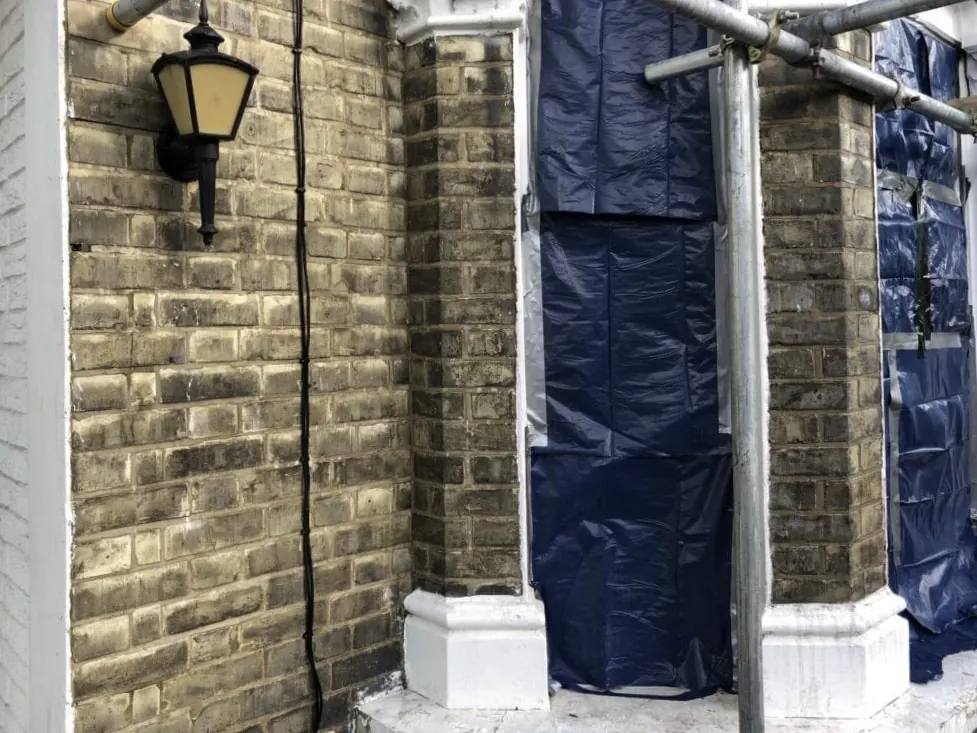
Heavily ingrained carbon staining and pollution soiling on period brickwork prior to chemical-assisted brick cleaning

The Chemical-Assisted Brick Cleaning Process

Chemical-assisted brick cleaning is a controlled, step-by-step process designed to remove heavy staining safely while protecting the brick face, mortar joints and overall structure of the building. Every stage is tailored to the specific condition of the brickwork. This assessment-led approach is particularly important when steam cleaning is not enough for brickwork, helping to clearly determine whether steam or chemical brick cleaning is the most appropriate solution before any full cleaning takes place.

1. Initial Inspection & Brickwork Assessment

Every project begins with a detailed inspection of the brickwork. This includes identifying the brick type, assessing the condition of the mortar joints, and determining the nature and depth of the staining. Particular care is taken with period, heritage and older brickwork, where sensitivity and breathability are critical.

2. Protection of Surrounding Areas

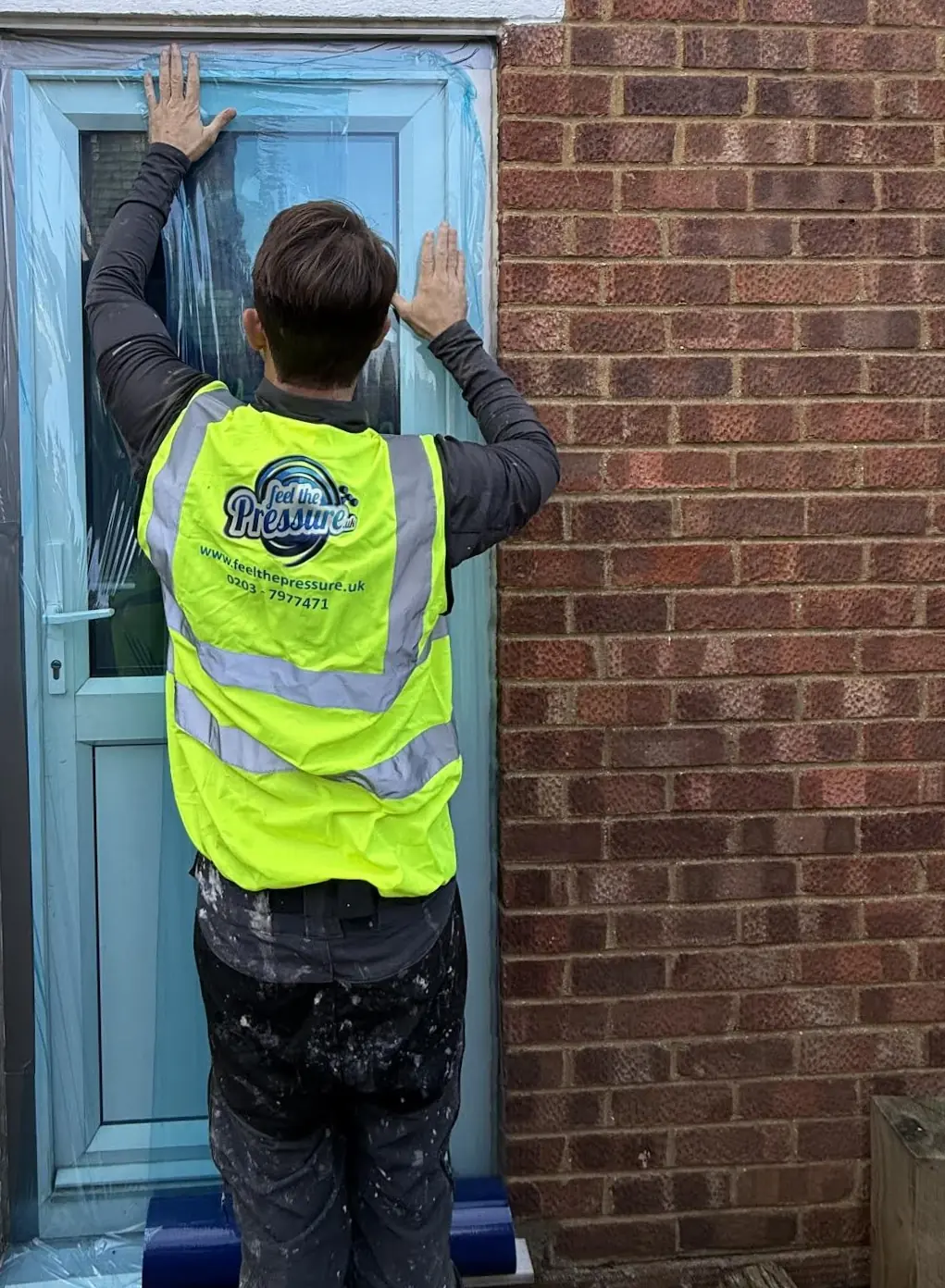
Before any chemical brick cleaning takes place, all surrounding areas are carefully protected. This includes windows, doors, stonework, metal fixtures, paving and adjacent surfaces. Appropriate masking and containment methods are used to ensure the cleaning process remains fully controlled and confined to the intended areas only.

3. Test Patch & Method Selection

A test patch is carried out on a discreet area of brickwork to confirm how the surface responds to the selected treatment. This allows the cleaning approach to be fine-tuned — including selecting the most effective and appropriate cleaning agent (as different contaminants require different solutions), as well as adjusting chemical dilution levels and dwell times — ensuring the process proceeds with full confidence in the expected result.

For clients who would like to see results before committing to full cleaning, we also offer an independent test patch service, which is explained in more detail below.

4. Controlled Application, Cleaning & Rinsing

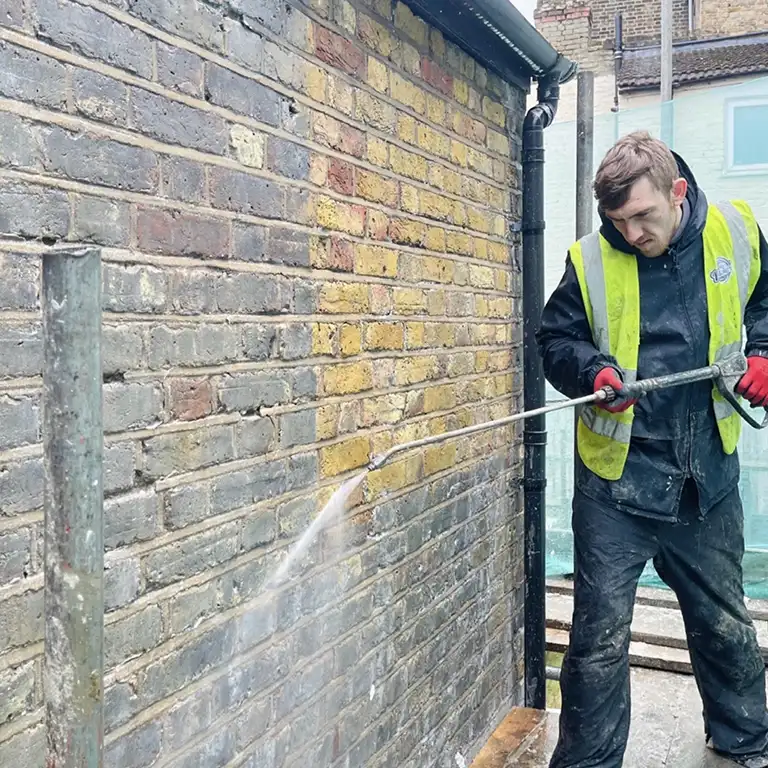
The cleaning agent is applied in a controlled and targeted manner, allowing it to break down ingrained staining before the brickwork is gently cleaned using heritage-approved, professional low-pressure equipment. The surface is then thoroughly rinsed and neutralised to remove residues and ensure the brickwork remains clean, stable and fully breathable.

5. Final Inspection

Once cleaning is complete, the brickwork is carefully checked to ensure an even finish, full breathability and that the brick face and mortar joints remain undisturbed.

If you’re unsure whether chemical-assisted brick cleaning is required, a test patch provides a clear, risk-free way to confirm the most appropriate approach for your brickwork.

chemical-assisted-brick-cleaning-protection.webp

Careful protection of doors and surrounding surfaces before chemical-assisted brick cleaning.

Free Test Patch for Chemical-Assisted Brick Cleaning

Every chemical-assisted brick cleaning project I undertake begins with a free test patch. This is a critical step — not a formality — and it ensures the cleaning method is both effective and safe for your specific brickwork before any full cleaning is agreed.

The test patch allows me to assess how your bricks respond to treatment, confirm the correct cleaning agent, and fine-tune dilution levels, dwell times, and finishing methods. This is especially important on period, heritage, listed, and conservation-area properties, where brick type, age, and breathability vary significantly.

Unlike one-size-fits-all approaches, a test patch provides clear, visible proof of what can realistically be achieved — without risk.

Why a Test Patch Matters

Chemical-assisted brick cleaning must be carefully controlled. Different contaminants react differently, and the same staining can behave very differently depending on brick composition and exposure history. The test patch ensures:

  • The staining can be safely broken down without damaging the brick face

  • Mortar joints remain intact and undisturbed

  • The brickwork retains full breathability after cleaning

  • The final result will be even, consistent, and appropriate for the building

It also prevents unnecessary chemical use where steam cleaning or gentler methods may be sufficient, ensuring the least intrusive approach is always chosen.

Carried Out Personally by Me

The test patch is carried out personally by me, Frank Bishop, not subcontractors or surveyors. With over 15 years’ experience in professional brick cleaning across London and the Home Counties, I’m able to interpret results accurately and advise honestly — even if that means recommending a different method or no cleaning at all.

There’s no pressure and no obligation. The test patch is about clarity, transparency, and protecting your property.

See the Results Before You Commit

Once the test patch is complete, you’ll be able to clearly see:

  • The level of staining removal achievable

  • The appearance of the cleaned brick compared to untreated areas

  • Whether chemical-assisted cleaning is the correct solution for your brickwork

Only once you’re happy with the result do we move forward with full cleaning.

If you’d like to arrange a free chemical-assisted brick cleaning test patch or discuss the most suitable approach for your property, get in touch today for a straightforward, expert-led assessment.

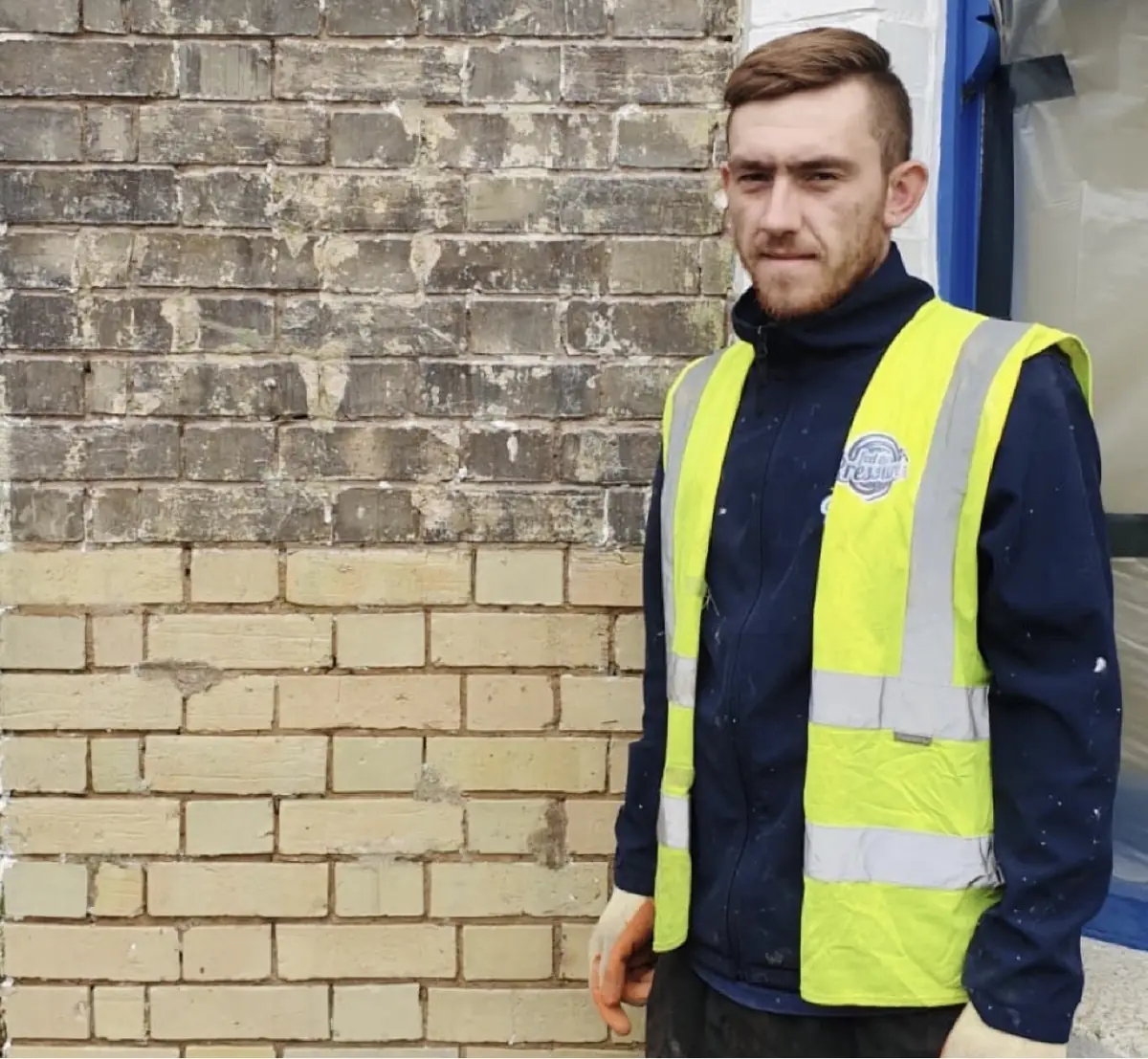
chemical-assisted-brick-cleaning-test-patch-period-brickwork.webp

Chemical-assisted brick cleaning test patch showing heavy carbon staining removal on period brickwork

Acid Brick Cleaning for Carbon Staining Removal

Where heavy carbon staining or long-term atmospheric pollution is present, acid-assisted brick cleaning — specifically specialist hydrofluoric-based brick cleaning applications — are often used to break down contamination bonded within the brick surface.

These products are applied at controlled dilutions, with strict dwell times, and are then thoroughly rinsed and neutralised to protect the brick face, mortar joints, and the overall breathability of the brickwork. This approach is particularly important on period, heritage, listed, and conservation-area properties, where inappropriate cleaning methods can cause long-term damage.

Acid Brick Cleaning for Mortar Stain & Cement Residue Removal

The term acid brick cleaning is also commonly used when referring to the treatment of mortar staining and cement residue, most often associated with new build brick cleaning and post-construction clean-downs.

In these situations, hydrochloric acid–based brick cleaning applications may be used to target mortar-related contamination rather than the brick face itself. This allows cement residues and smears to be safely broken down and removed where required to achieve a clean, consistent finish, while maintaining the appearance, integrity, and condition of the surrounding brickwork.

So, Is Acid Brick Cleaning the Same as Chemical-Assisted Brick Cleaning?

Acid brick cleaning is one type of chemical-assisted brick cleaning, but not all chemical-assisted brick cleaning involves acid-based treatments. In professional brick cleaning, the term chemical-assisted covers a broad range of products and methods, selected based on the type of contamination present and the condition of the brickwork.

While acid-based solutions are sometimes required for specific issues such as heavy carbon staining or cement contamination, many brick cleaning projects can be completed using non-acid or low-impact alternatives. The key is selecting the least aggressive method capable of safely achieving the desired result.

Every project is approached on an assessment-led basis, ensuring the correct cleaning method is chosen for the brickwork rather than applying a one-size-fits-all solution.

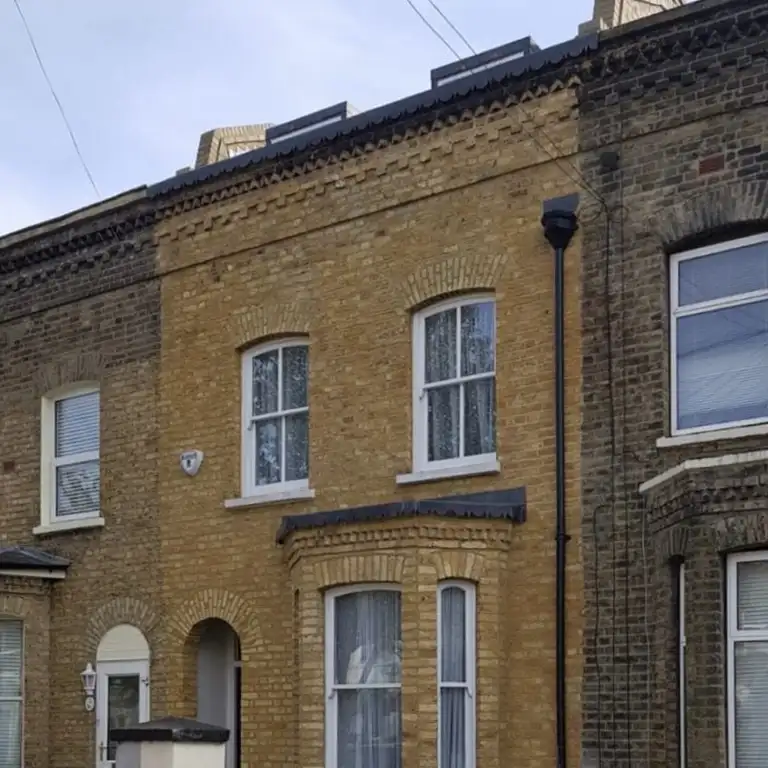
feel_the_pressure_brick_cleaning10.webp

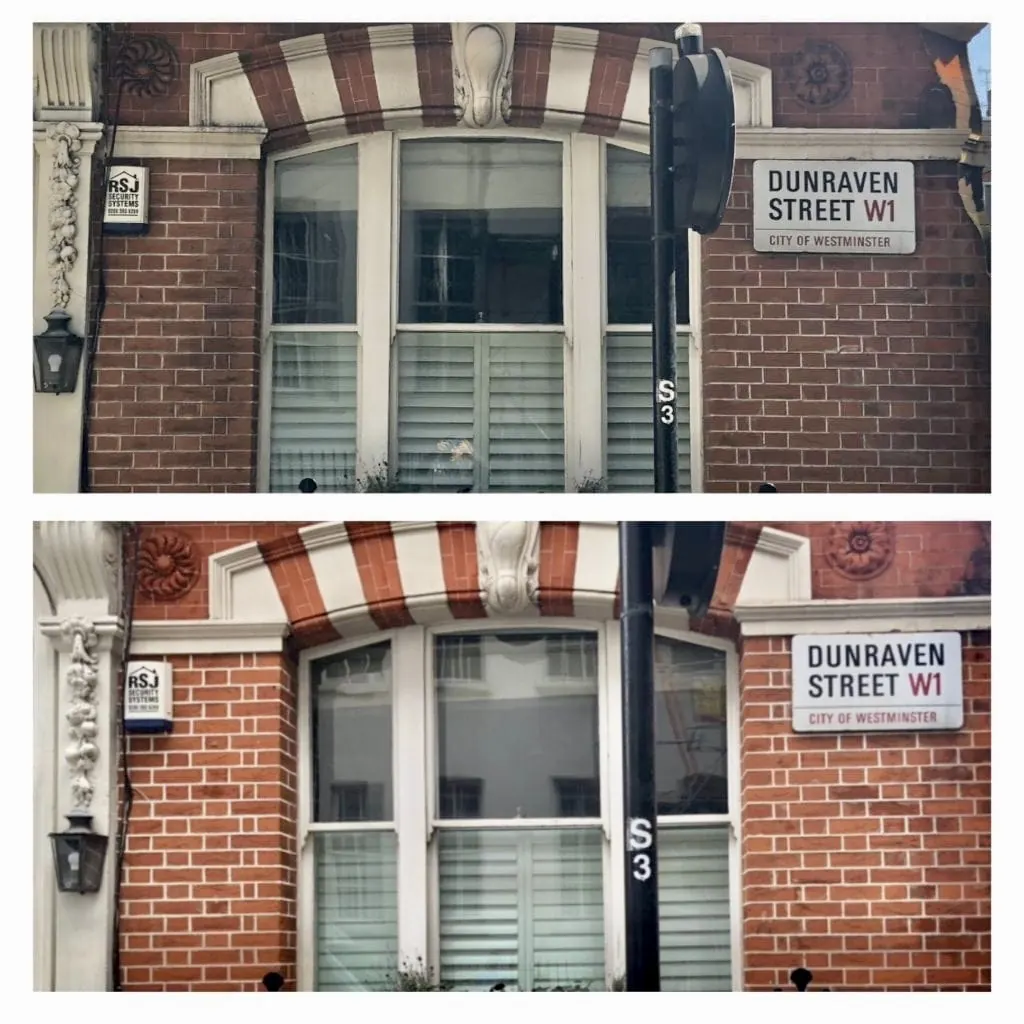
Period brickwork following acid-assisted cleaning, with neighbouring properties still affected by long-term carbon staining.

Non-Acid Brick Cleaning Methods & Alternative Chemical Treatments

Not all chemical-assisted brick cleaning requires the use of acid-based products. In many cases, non-acid brick cleaning methods are more appropriate and can achieve excellent results without the need for acidic cleaners.

Depending on the type of contamination present, chemical-assisted brick cleaning may involve:

  • Traffic Film Remover (TFR) and specialist degreasers for atmospheric soiling, oil residues, and general urban pollution

  • Paint softeners and coating removers where residual paint, staining, or previous coatings are present on brickwork. In cases where paint removal is required rather than surface cleaning, this is addressed as part of our brick paint removal service

  • Alkaline or neutral cleaning solutions for certain environmental contaminants and surface discolouration

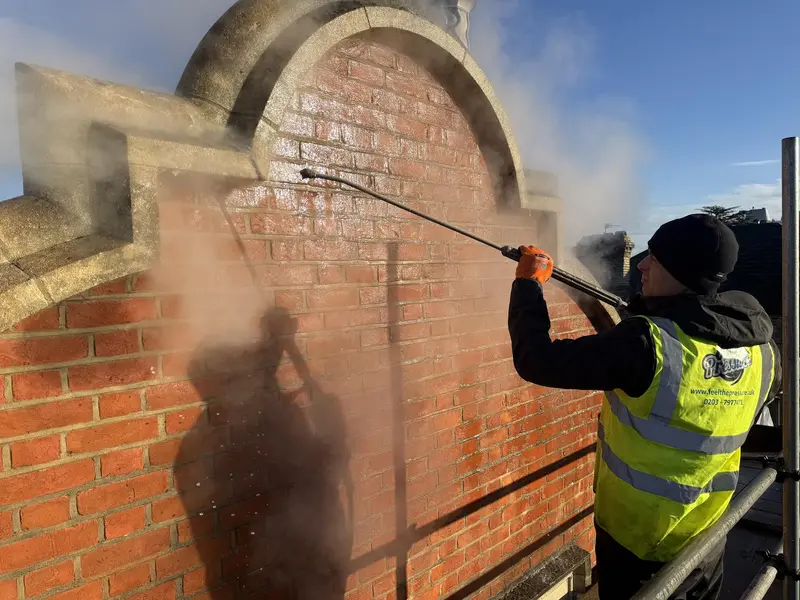
  • Steam cleaning, often as a completely chemical-free process, suitable for certain types of organic staining, surface soiling, and more sensitive brickwork, either as a standalone method or as a finishing stage following chemical treatment.
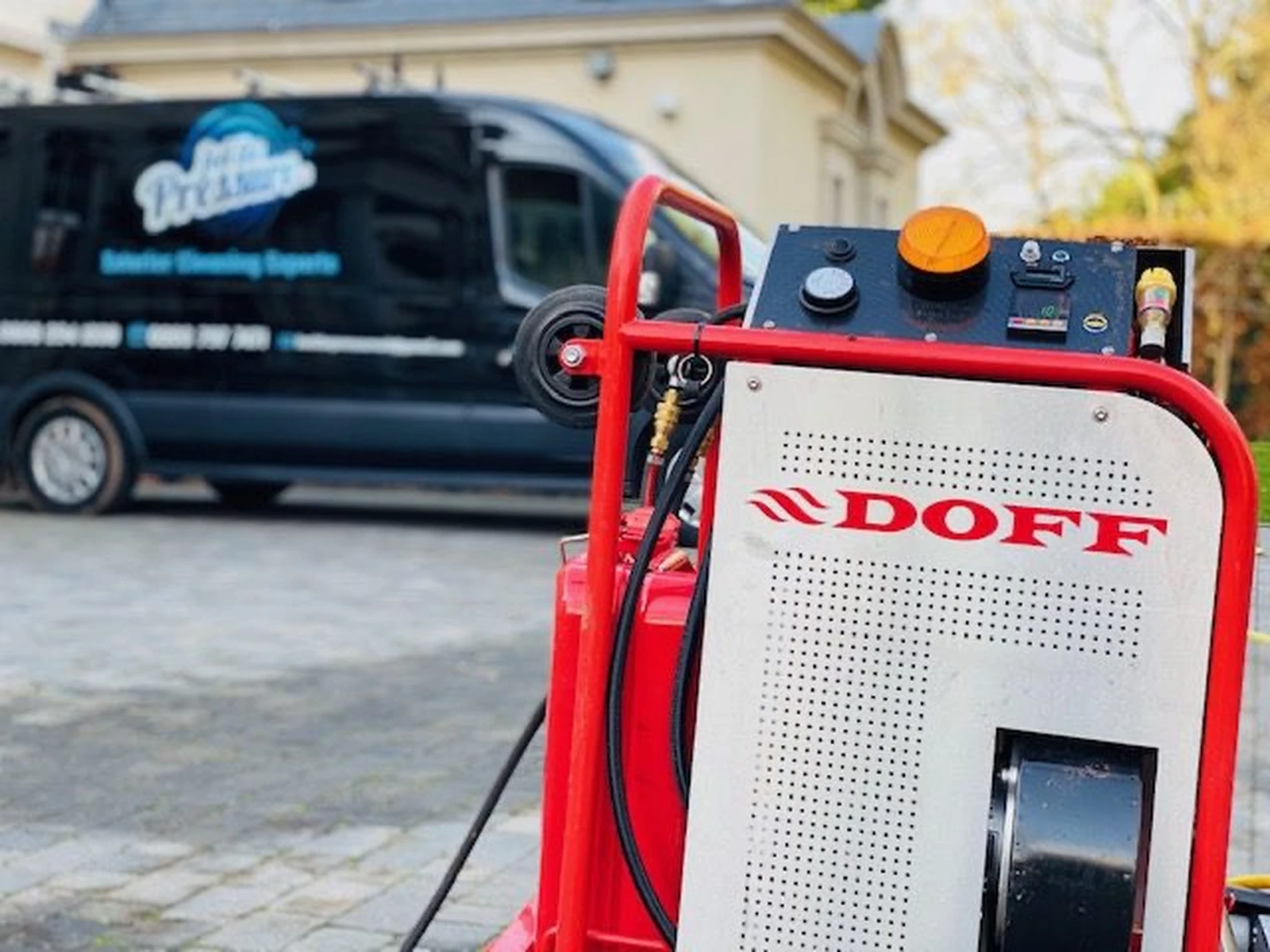
    Learn more about our DOFF steam brick cleaning service

As with all methods used, the most appropriate approach is confirmed through a detailed inspection and test patch, ensuring the least aggressive solution is used to achieve the desired result safely.

doff-brick-cleaning-heritage-wall-mobile.webp

Chemical Brick Cleaning — London, the Home Counties & Surrounding Counties

At Feel the Pressure UK, we carry out specialist chemical brick cleaning in London, the Home Counties and surrounding counties, working on properties affected by long-term traffic pollution, atmospheric staining and ingrained discolouration.

We work on modern homes, period properties, commercial buildings and sensitive heritage sites, using the correct method for each type of brickwork — from acid-based cleaning for heavy carbon staining to non-acid and DOFF steam cleaning for more delicate surfaces.

We cover a wide service area including:

  • London & Middlesex – all Greater London boroughs

  • Essex – Brentwood, Billericay, Maldon, Witham

  • Kent – Orpington, Westerham, Tunbridge Wells, Cranbrook

  • Surrey – Banstead, Leatherhead, Dorking, Farnham

  • Hertfordshire – Harpenden, Hitchin, Berkhamsted, Radlett

  • Sussex – Lewes, East Grinstead, Haywards Heath, Worthing

  • Berkshire – Maidenhead, Ascot, Bracknell, Newbury

  • Buckinghamshire – Marlow, Gerrards Cross, Chesham, Amersham

  • Bedfordshire – Ampthill, Flitwick, Biggleswade

  • Oxfordshire – Abingdon, Thame, Henley-on-Thames

We also travel to surrounding areas such as Cambridgeshire, Northamptonshire and Wiltshire, depending on project size and requirements.

Whether you’re a homeowner looking for professional chemical brick cleaning in London, Kent or Surrey, or a landlord, developer or contractor based in Berkshire, Essex or Hertfordshire, every project is assessment-led and tailored to the condition of your brickwork, ensuring safe, controlled and long-lasting results.

Contact us today for more information, a free no-obligation quotation, or to arrange a test patch.

chemical-brick-cleaning-london-w1-period-property.webp

Why Choose Feel the Pressure UK for Chemical Brick Cleaning?

Choosing the right contractor for chemical brick cleaning is critical — particularly on period, heritage, listed, and heavily stained brickwork, where the wrong approach can cause permanent damage. At Feel the Pressure UK, every project is handled personally by me, Frank Bishop, from the initial inspection and test patch through to completion.

With over 15 years’ hands-on experience in professional brick cleaning across London and the Home Counties, I have carried out chemical brick cleaning on a wide range of properties — from heavily carbon-stained Victorian and Edwardian façades to modern developments and sensitive heritage buildings. This experience allows me to assess brickwork accurately and apply chemical cleaning only where it is genuinely required.

Why Homeowners, Landlords & Developers Choose Us

  • Assessment-led specialist cleaning, tailored to your brickwork — including chemical brick cleaning, heritage-safe DOFF steam cleaning, and controlled low-pressure rinsing

  • Proven experience across all brick types, including Victorian, Edwardian, modern, commercial, and heritage brickwork

  • Direct communication throughout — you deal with me from first enquiry to completion

  • Free test patch on every project, so you can see realistic results before committing

  • Fully insured and highly reviewed, trusted across London and the Home Counties

  • Respect for your property, with clean, tidy working practices at all times 

    Our Chemical Brick Cleaning Guarantee

    Your brickwork is not something you should ever have to take a risk with. Every chemical brick cleaning project I undertake comes with a clear, straightforward guarantee:

    • Safe, controlled methods only — no aggressive pressure washing, no shortcuts

    • Results proven upfront, with a free test patch before any full cleaning is agreed

    • Complete transparency — I inspect it, I clean it, and I finish it. No subcontractors, no surprises

    My commitment is simple: your brickwork is cleaned properly, safely, and honestly, with the long-term condition of the building always the priority.

doff-steam-cleaning-machine-in-use.webp

Get a Quote for Chemical Brick Cleaning

If your brickwork is affected by heavy carbon staining, long-term atmospheric pollution, or ingrained discolouration, the best place to start is with a proper assessment.

We offer free, no-obligation quotations and a free test patch where appropriate, allowing you to see realistic results on your own brickwork before committing to any work. You’ll receive clear, honest advice on whether chemical brick cleaning is the correct solution — and what outcome can realistically be achieved.

Where chemical brick cleaning is required, it should be carried out once — and carried out correctly.

To discuss your property or arrange an assessment, contact us today and speak directly with me.

feel_the_pressure_brick_cleaning8.webp

FAQs

Below are clear answers to common questions about chemical brick cleaning, including safety, acid-based treatments, steam vs chemical methods, carbon staining removal, mortar protection, heritage suitability, and the role of a test patch.

Frequently Asked Questions About Chemical Brick Cleaning-

Is chemical brick cleaning safe for brickwork?-

When carried out correctly, chemical brick cleaning is safe for brickwork. At Feel the Pressure UK, every chemical-assisted clean is assessment-led and confirmed with a test patch, ensuring the correct product, dilution and method are used for the specific brick type. This protects the brick face, mortar joints and breathability while achieving effective staining removal.

Is acid brick cleaning bad for bricks?+

Acid brick cleaning is not inherently bad for bricks, but it must be used selectively and correctly. Inappropriate acid use or aggressive application can cause damage. Where acid-based cleaning is required — such as for heavy carbon staining or cement contamination — it is applied at controlled dilutions, neutralised thoroughly, and only used where assessment confirms it is necessary.

Is chemical brick cleaning suitable for period or heritage properties?+

Yes — chemical-assisted brick cleaning can be suitable for period, heritage, listed and conservation-area properties when carried out by an experienced specialist. At Feel the Pressure UK, particular care is taken with older brickwork, where brick type, age and breathability vary significantly. A test patch is always used to confirm the safest and most appropriate approach before any full cleaning is undertaken.

Why is a test patch so important before chemical brick cleaning?+

At Feel the Pressure UK, a test patch is a critical part of the chemical brick cleaning process, not an optional extra. It confirms how the brickwork responds to treatment, allows the method to be fine-tuned, and provides clear, visible proof of what can realistically be achieved — without risk to the brick face or mortar joints.

Will chemical brick cleaning damage mortar joints?+

No — when carried out properly, chemical brick cleaning does not damage sound mortar joints. Part of the initial inspection is assessing mortar condition and strength. If mortar is weak, fragile or historic, the cleaning method is adjusted accordingly. All cleaning is carried out using controlled, low-pressure techniques to avoid erosion or disturbance.

When is steam cleaning not enough for brickwork?+

Steam cleaning may not be sufficient where staining is deeply ingrained, such as black carbon staining, long-term atmospheric pollution or contamination bonded within the brick pores. In these situations, steam cleaning alone may improve appearance but will not fully release the staining. Chemical-assisted brick cleaning allows the contamination to be safely broken down before controlled rinsing.

What is the difference between steam and chemical brick cleaning?+

Steam brick cleaning uses high-temperature, low-pressure steam to remove surface soiling and organic growth and is often suitable for sensitive or lightly soiled brickwork. Chemical brick cleaning uses specialist products to break down ingrained or bonded contamination that steam alone cannot remove. The correct method is determined through inspection and a test patch rather than assumption.

Can black carbon staining be fully removed from brickwork?+

In many cases, black carbon staining can be significantly reduced or fully removed, but results depend on factors such as brick type, age, exposure history and staining depth. A test patch provides a clear, realistic indication of what can be achieved before any commitment is made.

How do I know if chemical brick cleaning is required for my property?+

The only reliable way to know is through a professional inspection and test patch. Visual appearance alone can be misleading, as some staining sits deep within the brick pores. An assessment-led approach ensures the least aggressive method capable of achieving the desired result is always chosen.

Show More Show Less

Latest Blog Posts

Patio Cleaning Around Swimming Pools: Safe, Non-Slip & Professional Results

Swimming Pool Surround Cleaning Services

We provide specialist swimming pool surround cleaning services for patios, paving and natural stone around swimming pools. These areas require careful, professional cleaning due to constant moisture, algae growth and surface contamination that can quickly make them slippery and unsafe.

Working across London, Surrey and the Home Counties, every poolside surface is assessed individually to determine the safest and most effective cleaning method — whether that involves DOFF steam cleaning, controlled pressure washing or targeted treatments to remove algae and restore the surface properly.

Patio areas around swimming pools and pool surrounds are one of the most challenging outdoor surfaces to keep clean. Constant moisture, organic growth and regular use create the perfect conditions for algae, staining and slippery surfaces to develop — often without homeowners realising how quickly it builds up.

I’m Frank Bishop, founder of Feel The Pressure UK. With over 15 years’ hands-on experience, I provide specialist poolside patio cleaning services and swimming pool surround cleaning services.

With over 200 verified 5-star customer reviews, I’ve built a reputation for reliable, high-quality patio and poolside cleaning across London, Surrey and the Home Counties.

Using a range of specialist cleaning methods — including DOFF steam cleaning, carefully controlled pressure washing, and targeted professional treatments where appropriate depending on the surface type — I safely clean and restore patios around swimming pools, removing built-up contamination and bringing back the natural colour of the stone without damaging the surface, jointing or surrounding areas.

When you contact Feel The Pressure UK, you deal directly with me — not a sales team or subcontractors. Every poolside patio cleaning project is personally assessed and carried out with a focus on safe, consistent and professional results.

Poolside patios don’t just become unsightly — they can become dangerously slippery. Removing algae and surface contamination properly not only improves appearance but also restores grip underfoot, making the area safer to use.


Read more
pool_patio_cleaning_before_after_sandstone_surrey.webp

Removing Exterior Paint from Brickwork Around Window Frames and Bay Windows

Removing paint from brickwork is a highly skilled service that requires specialist knowledge, professional equipment, and years of hands-on experience — especially where paint has been applied right up to window frames or bay windows.

Brickwork around windows is one of the most common areas where damage can be caused during paint removal. Window frames leave little room for error, and different materials respond in different ways to heat and paint-softening chemicals. Bay windows add further complexity, with curved brickwork, tight returns, and multiple surfaces meeting in a small area.

I’m Frank Bishop, lead paint removal specialist at Feel The Pressure UK, and I regularly carry out brick paint removal around windows and bay windows, doors, and other intricate brickwork. I’ve personally restored hundreds of residential properties back to their original brick across London and the surrounding counties. These are jobs where good preparation, the right technique, and experience make all the difference. Whether the frames are uPVC, timber, or metal, a controlled approach helps protect both the brickwork and the surrounding finishes.

In this article, I’ll explain why removing paint from brickwork around windows requires extra care, how different window types are affected, and what’s involved in achieving a clean result without unnecessary risk.

Read more
window-and-frame-protected-during-brick-paint-removal-on-a-london-home.webp

Brick Arch Paint Removal – Case Study

Careful Restoration of Arched Brickwork

Painted brick arches are one of the most commonly mishandled features on older properties. Their curved faces, exposed mortar joints, and often softer bricks mean that aggressive paint removal methods can quickly cause irreversible damage.

This project involved the careful removal of paint from a brick arch using a controlled, step-by-step process designed to protect the brickwork and surrounding surfaces while restoring its original appearance. Rather than relying on high pressure or abrasive techniques, the focus was on preparation, protection, and gentle brick paint removal — an approach particularly well suited to arched and decorative brickwork.

The images below document each stage of the brick arch paint removal process, from the initial condition and protection through to paint softening, steam cleaning, and the final result, where the brick’s natural colour and detail were successfully revealed without surface damage.

Read more
brick-arch-paint-removal-before-under-100kb.webp

What to Expect After Brick Paint Removal

I’m Frank Bishop, founder and lead cleaner at Feel the Pressure UK, and I’ve been providing the very best in brick paint removal, brick cleaning, and brick restoration services for over 15 years.

Over that time, I’ve personally restored hundreds of residential and commercial properties across London, the Home Counties, and surrounding areas — from classic London yellow stocks to delicate soft red rubbers, textured brick, and handmade bricks. We’ve restored them all.

Before starting any full-scale paint removal, I always carry out a detailed inspection and give each customer my honest, experienced opinion on how their brickwork is likely to look once the paint is removed.

If we notice any visible signs of poor-quality restoration work or anything that stands out, we’ll always talk it through with you before any work starts. These can include mismatched pointing styles, heavily filled or over-repaired areas, and patches where damaged brickwork has been hidden under layers of paint.

Read more
doff_brick_paint_removal_london_before_after.webp

Our Customer Feedback